Fun with ketubot – 1830s Modena, part 4/5

Faced with the task of copying an image from the internet and scaling it up to ketubah size, how does one go about it?

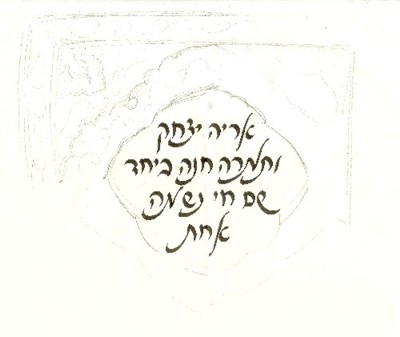
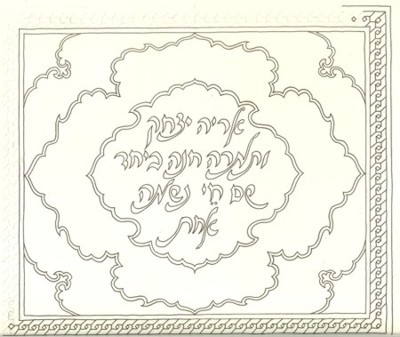
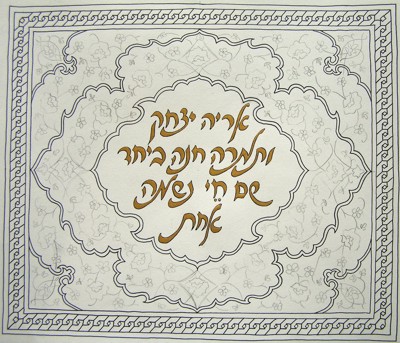
Technique from primary school. Impose a grid onto your original, and copy each square into a scaled-up grid on your target medium.

transfer

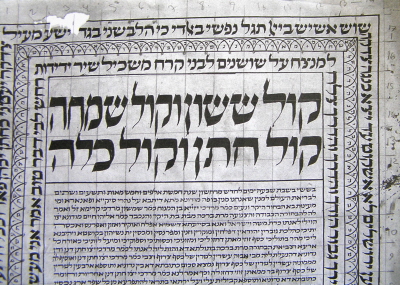
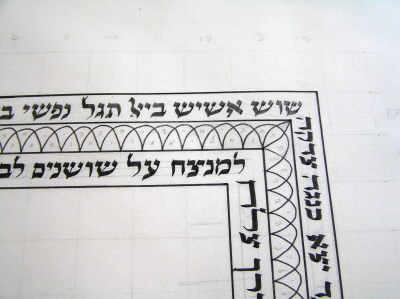
Printing the original picture gave me something on standard printer paper – a good start, but not big enough. So I marked a grid with three-quarter-inch squares onto my printout, and made a grid of one-inch squares on my paper.

The three-quarter-inch squares on the printout helped me figure out how big the target letters needed to be, and roughly how they should be spaced relative to the borders and to each other.

To do the actual letters, I spent some time learning the script, first, so that it would be a process of natural writing, rather than copying shapes square-by-square. This meant that the reproduction wasn’t quite exact, but the proportions were right, and the general look worked out nicely.

transfer2

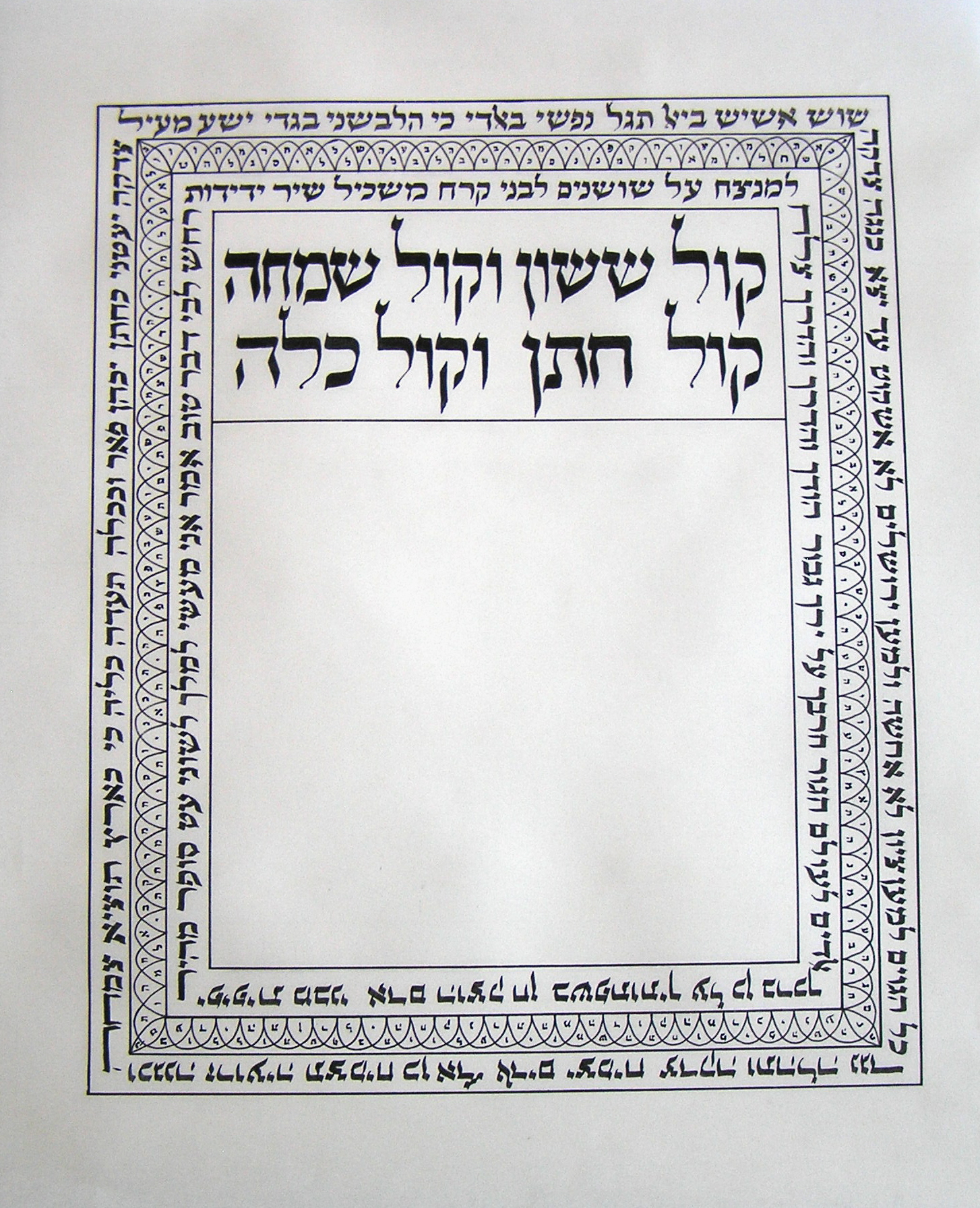
Afterwards, of course, when you’re sure the ink’s dry, you rub off all the pencil marks, and then it looks pretty scrumptious. Allowing for the skewing caused by my imperfect photography, they’re pretty much just the same – nice, eh? I like this border very much.

Ketubah, Modena, 1831kol-sasson-border

Quills

This time last year, we had Quill Month – seventeen posts about quills.

My new cohort of students is causing me to have more to say about quills, but first – here’s all the old posts. Of course, I suggest reading them all.

Part 1
Part 2
Part 3
Part 4
Part 5
Part 6
Part 7
Part 8
Part 9
Part 10
Part 11
Part 12
Part 13
Part 14
Part 15
Part 16
There is no Part 17
Part 18


Fun with ketubot – 1830s Modena, part 3/5

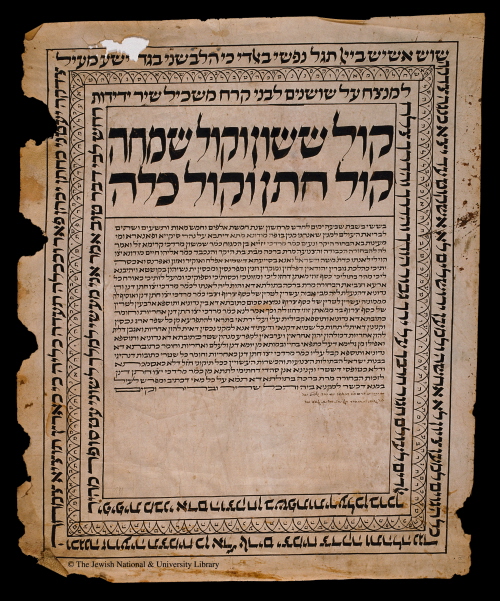
Ketubah, Modena, 1831The ketubah text itself is a pretty standard text, with a few interesting features (click image to see bigger version; text reproduced in full below).

The date of the wedding was 7 Marhesvan 5592, or Friday October 14th, 1831. It was in Modena (which they would have pronounced Modona, hence the spelling מודונא ) – note the reference to the rivers Secchia and Panaro; this is how our most formal documents (not usually ketubot, today) locate towns. The groom’s name was Rabbi Mordechai, son of Rabbi Shimshon Mordechai Crema (deceased); the bride’s name was Bracha, daughter of Eliyahu Hayyim Modena. The currency is given as litrin; I don’t know as much about what this means as I’d like to.

The most striking variant from today’s standard text is the generous helping of honorifics. For example, where today we would say “the groom,” this text has “the glorious, honourable young man,” and followed by “may he see his children and his days be long.” “The bride” is “the respected modest young woman,” “most blessed of women in tents.” Her father is apparently also a rabbi, and his name is followed by “may God the Rock sustain him.” I rather like the extra level of formality this gives the individuals concerned, myself.

For my client, I used a text essentially similar, just more in line with “standard contemporary American” phrasing, insofar as such a phrase means anything. Further, it adds the Lieberman clause and the mothers’ names. (More about today’s standard text here.)

Here’s the text as in the 1831 version:

בששי בשבת שבעה ימים לחדש מרחשון שנת חמשת אלפים וחמש מאות ותשעים ושתים לבריאת העולם למנין שאנחנו מנין בו פה מודונא מתא דיתבא על נהרי סיקייא ופאנארא ומי מעינות בא הבחור היקר ונעים כמ”ר מרדכי יזיי”א בן המנוח כמ”ר שמשון מרדכי קרימא ז”ל ואמר לה להבחורה הכבודה והצנועה מרת ברכה מב”ת בת היקר והנכבד כמ”ר אליהו חיים מודונא יצ”ו הוי לי לאנתו כדת משה וישראל ואנא בסייעתא דשמיא אפלח ואוקיר ואזון ואפרנס ואכסה יתיכי כהלכת גוברין יהודאין דפלחין ומוקרין וזנין ומפרנסין ומכסין ית נשיהון בקושטא ויהיבנא ליכי מהר בתוליכי כסף זוזי מאתן דחזו ליכי ומזוניכי וכסותיכי וספוקיכי ומעיל לותיכי כאורח כל ארעא וצביאת הבחורה מרת ברכה בתולתא דא והות ליה לאנתו לכמ”ר מרדכי יצ”ו חתן דנן ואוסיף לה מממוניה עשרין לטרין של כסף צרוף נמצא סכום כתובתא דא בין נדוניא ותוספא ארבעין לטרין של כסף צרוף בר ממאתן זוזי דחזו לה וכך אמר לנא כמ”ר מרדכי יצ”ו חתן דנן אחריות כתובתא דא נדוניא ותוספא קבילית עלי ועל ירתאי בתראי להתפרעא מן כל שפר ארג נסכין וקנינין דאית לי תחות כל שמיא דקנאי ודעתיד אנא למקני נכסין דאית להון אחריות ואגבן דלית להון אחריות דכולהון יהון אחראין וערבאין למפרע מנהון שטר כתובתא דא נדוניא ותוספא ואפילו מן גלימא דעל כתפאי בחיי ובמותא מן יומא דנן ולעלם ואחריות וחומר כתובתא דא נדוניא ותוספא קבל עליו כמ”ר מרדכי יצ”ו חתן דנן כאחריות וחומר כל שטרי כתובות תנהיגי בבנות ישראל הבתולות הצנועות והכשרות העשויין ככל תיקוני חז”ל דלא כאסמכתא ודלא כטופסי דשטרי וקנינא אנן סהדי דחתימי לתתא מן כמ”ר מרדכי יצ”ו חתן דנן לזכות הבחורה מרת ברכה בתולתא דא תמ”א על כל מאי דכתיב ומפרש לעיל במנא דכשר למקניא ביה והכל שריר ובריר וקים


Fun with ketubot – 1830s Modena, part 2/5

Ketubah, Modena, 1831This design uses different sizes of letters to make a lovely rich lacy border. What are the texts it’s using?

The first text around the outside is Isaiah 61:10-62:1.

שוש אשיש בייﭏ תגל נפשי בﭏדי כי הלבשני בגדי ישע מעיל צדקה יעטני כחתן יכהן פאר וככלה תעדה כליה כי כארץ תוציא צמחה וכגנה זרועיה תצמיח כנ אד’ ﭏדים יצמיח ותהלה נגד כל הגוים למען לא אחשה ולמען ירושלים לא אשקוט עד יצא כגנה צדקה I will greatly rejoice in the LORD, my soul shall be joyful in my God; for he hath clothed me with the garments of salvation, he hath covered me with the robe of righteousness, as a bridegroom decketh himself with ornaments, and as a bride adorneth herself with her jewels. For as the earth bringeth forth her bud, and as the garden causeth the things that are sown in it to spring forth; so the Lord GOD will cause righteousness and praise to spring forth before all the nations. For Zion’s sake will I not hold my peace, and for Jerusalem’s sake I will not rest, until the righteousness thereof go forth as brightness, and the salvation thereof as a lamp that burneth.

It’s the first three verses of the haftarah associated with the Seven Weeks of Consolation, which falls out on Nitzavim or Vayelech. But it’s here in a ketubah because it’s also known as the hatan’s haftarah; in the Middle Ages it was a widespread custom for communities all over Europe and North Africa and beyond for the hatan to read this haftara in celebration of a wedding. This custom was extant at least up until the early 20th century.

There was a less widespread custom to have a special maftir for the groom as well; the verses from Hayei Sarah (Genesis 24:1-6). Traces of this custom remain among Syrian communities, who sing these verses (with Aramaic Targum) when the groom comes up to take his aliyah.

Anyway, this haftarah uses wedding imagery to describe the consolation of Jerusalem, hence its suitability as a haftarah for a hatan. In the weeks following the destruction of Jerusalem, the haftarot get more and more confident that the city will be restored, culminating in the joy of a wedding, and this haftarah.

The beautiful thing here is that in the liturgical cycle, we use the imagery of a wedding to evoke the nascent hopes of Jerusalem – but in the lifecycle, we use the imagery of the consolation of Jerusalem to evoke the nascent hopes of a marriage – as well as having this as a special haftarah in the wedding week, phrases from it feature in the celebratory meals, in the sheva berakhot.

אשת חיל מי ימצא ורחק מפנינים מכרה בטח בה לב בעלה ושלל לא יחסר גמלתהו טוב ולא רע כל ימי חייה דרשה צמר ופשתים ותעש בחפץ כפיה היתה כאניות סוחר ממרחק תביא לחמה ותקם בעוד לילה ותתן טרף לביתה וחוק לנערתיה זממה שדה ותקחהו מפרי כפיה נטעה כרם חגרה בעוז מתניה ותאמץ זרועתיה טעמה כי טוב סחרה לא יכבה בלילה נרה ידיה שלחה Who can find a virtuous woman? for her price is far above rubies. The heart of her husband doth safely trust in her, so that he shall have no need of spoil. She will do him good and not evil all the days of her life. She seeketh wool, and flax, and worketh willingly with her hands. She is like the merchants’ ships; she bringeth her food from afar. She riseth also while it is yet night, and giveth meat to her household, and a portion to her maidens. She considereth a field, and buyeth it: with the fruit of her hands she planteth a vineyard. She girdeth her loins with strength, and strengtheneth her arms. She perceiveth that her merchandise is good: her candle goeth not out by night. She layeth her hands to the spindle, and her hands hold the distaff. She stretcheth out her hand to the poor; yea, she reacheth forth her hands to the needy.

The text in the hoops around the edge is from Eshet Hayil, the last chapter of Proverbs. Interestingly, with both this and the other texts, you’ll note that the artist stopped halfway through a verse, when he ran out of space!

למנצח על שושנים לבני קרח משכיל שיר ידידות רחש לבי דבר טוב אמר אני מעשי למלך לשוני עטסופר מהיר יפיפית מבני אדם הוצק חן בשפתותיך על כן ברכך ﭏדים לעולם חגור חרבך על ירך גבור הודך והדרך והדרך צלח For the chief musician, on “lilies.” To the sons of Korach. A Maskil. A love song. My heart is inditing a good matter: I speak of the things which I have made touching the king: my tongue is the pen of a ready writer. Thou art fairer than the children of men: grace is poured into thy lips: therefore God hath blessed thee for ever.

The inner layer of text is the first four-and-a-bit verses of Psalm 45, which identifies itself as “shir yedidit,” “a love song.” Sometimes it was done as the Psalm of the Day, on the day of a wedding, in place of the usual Psalm of the Day in the back of the siddur.

קול ששון וקול שמחה קול חתן וקול כלה The sound of joy and the sound of celebration; the voice of the groom and the voice of the bride.

And this part, the biggest letters, is from Jeremiah; it appears several times, also in the context of Jerusalem, where first it is pronounced as a doom, and later is a promise of blessing.

Next time: the text in the middle.


Fun with ketubot – 1830s Modena, part 1/5

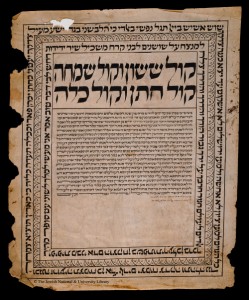
Ketubah, Modena, 1831“Can you copy this ketubah?” my client asked me.

Since this is a Historical Ketubah, there aren’t copyright issues, as there would be if someone wanted me to copy a contemporary design. So I’m happy to copy it; it’s lovely!

“Copy” can mean several different things, though.

It might mean “make us a border that looks basically like this one, but write a ketubah text for our wedding.”

It might mean “make us a border that looks very much like this one, using historically-accurate materials, but write a ketubah text for our wedding.”

It might mean “make us a border that looks like this one, with historically-accurate materials and all design flaws and age-related decay, but write a ketubah text for our wedding.”

It might mean “Copy this in every detail; it is not for a wedding, it is for an historical re-enactment.”

So first one ascertains just how close to the original the client desires it. Turns out we’re doing option 1, for this project, but you see how the others are entirely plausible also.

The image here is from the archive of the Jewish National & University Library, the JNUL. (this ketubah) They have a ketubah archive online – in their words, “The ketubbot digitization project aims to create a worldwide registry of ketubbot in public and private collections throughout the world. Based on the collection of the Jewish National and University Library with over 1600 items, the project contains ketubbot originating from dozens of different countries, and covering a time period of over 900 years. It is a major resource for research in Jewish history, law and art.”

Nifty, eh? So we have this link, to an old ketubah, and now we’re turning it into a ketubah for a contemporary wedding.


Awww, how sweet.

The Women’s Torah Project peeps sent me a pretty pretty certificate honouring me as one of the Sisters of the Torah, “dedicated to the discovery of ancient roots and the creation of powerful futures.”

Isn’t that sweet and generous of them? As I think I’ve said before, the project organisers really are rather a special bunch. What lovies.


Adhesive creep

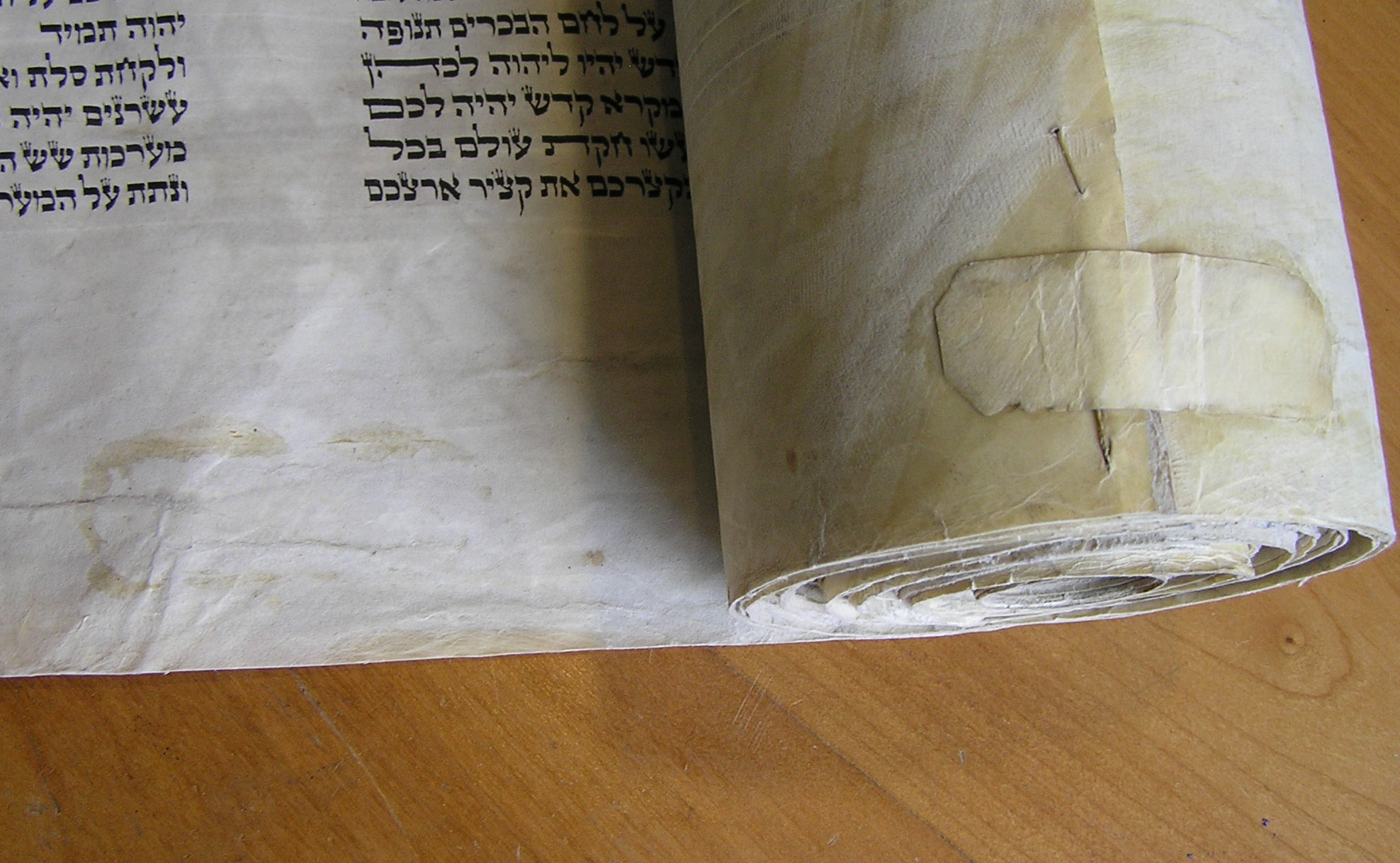
Adhesive creep on sefer Torah

Adhesive creep on a sefer Torah. The seam reinforcements are glued on; over time, the glue Creeps out from where it was originally put. Being sticky, the creepy glue sticks to a) other things b) dirt. Here, the glue from the reinforcement on the right-hand side of the picture has stained the Torah’s margin, on the left-hand side of the picture.

Preventing adhesive creep is a pastime of archivists; a sofer removes the stains with sandpaper, which tends to make archivists scream incoherently.

This is one of the differences between scribes, whose job is to keep a manuscript in good working order, and archivists, whose job is to preserve manuscripts for posterity. Scribes do practical things that archivists would never dream of doing. But they are both troubled by adhesive creep.


Genesis of artwork

First of all, I fish out my Full-Colour Sourcebook of Historic Ornaments. I have a shelf of books I use for inspiration, and this is one that never fails. Highly recommended.

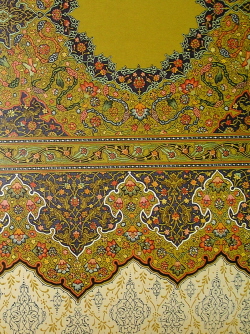
koran carpet page

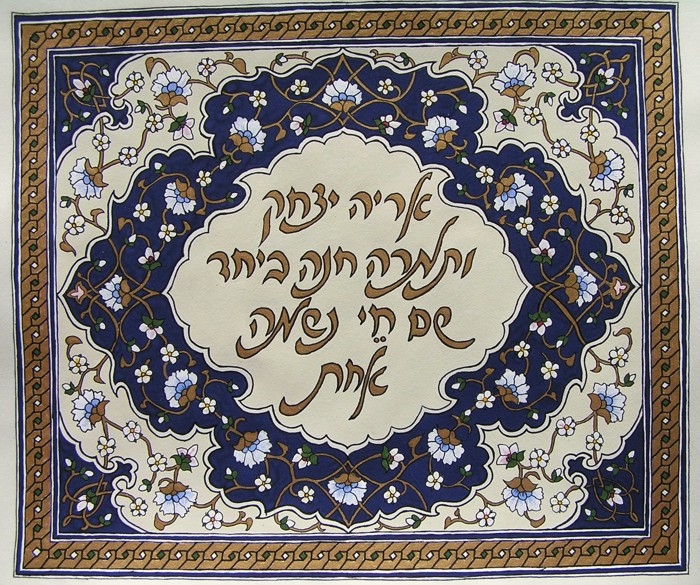
Turn to the Mughal India pages, because I’m in that sort of mood and I’ve got that sort of budget. I’ve been wanting to do something from this particular starting-point for ages. I know very little about Mughal India, except that it produced these kind of fantastically intense designs which I love.

Ask the letters how they want to be arranged. Let that dictate the shape in which they are enclosed. Sketch looks really dodgy at this point. If it’s a commission, this is what I send to my client along with whichever bits of artwork inspired me most, and I hope and trust that they can make the necessary leap of imagination.

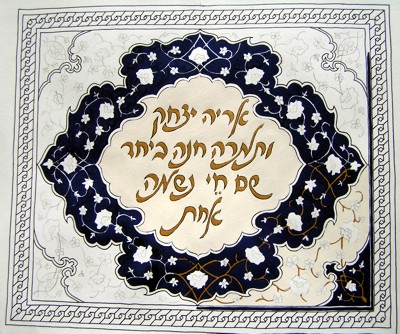
Pen-outline main sections, for encouragement purposes, also for accurate painting.

Gold…

And blue and cream…

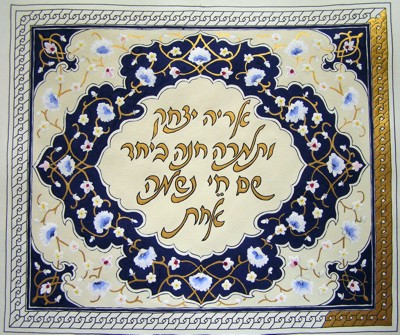
And the beginnings of flowers…

Almost everything…

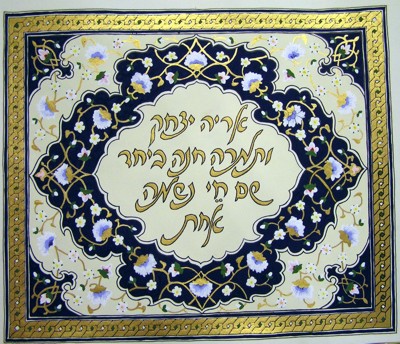
There.

Clicky image to see bigger


Random pretty

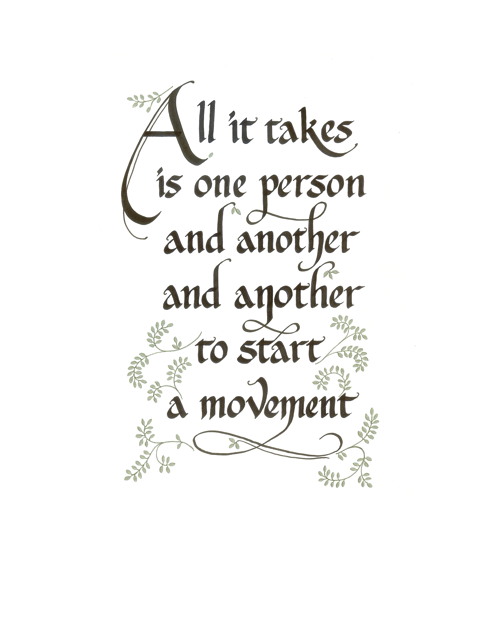
all-it-takes-500

A meditation on the incremental nature of change, with interconnected letters and increasingly-flourishing leaves.

Attributed to R’ Abraham Joshua Heschel, although I truly doubt Heschel ever said that, such that if anyone can find me a primary source I will eat my hat broccoli.

Prints available for purchase in my Etsy store, just in case you have some people in your movement who need honouring.


La vie soferet – Rodeph Sholom

A very Rodeph-Sholom couple of weeks.

Rodeph Sholom, for those not intimately familiar with Manhattan’s Upper West Side Jewish Scene, is a Reform synagogue of epic proportions, with after-school religious school program, and eponymous Reform day school a few blocks away. I have the good fortune to visit them relatively often.

Week before last I was giving an enormous crowd of second-graders a bit of an Introduction to Torah Writing with pieces written by one of my students for demonstration. (SEVENTY of them, my goodness. Impeccably behaved, too.) I was telling them about how you’re not supposed to kill an animal specially for making Torahs out of it, the cow has to have died for something else, and one of them said gravely “Ah…cow recycling?” which was sublime and a phrase I will definitely be using in future.

The third-and-fourth-graders were very pleasant as well. At the end, I let everyone come up and try to break the gid, the thread that’s used for sewing the panels, and one of the girls actually managed it. So I gave her the broken bit, she deserved it!

And then last week the b”mitzvah prep class, which is a whole rather excellent thing in itself; the shul does a package of six sort of meta-sessions where the kids and families get to think about What and Why and suchlike; space given over to consciousness which might otherwise be swallowed in details of Torah portions and party planning. I would think it was a pretty neat idea even if they didn’t have me at the first session giving people a close-up encounter with the Torah scroll — joke — but seriously, it’s rather lovely to be able to say to these families “You’re about to put a lot of effort into reading from this thing. Here’s why it’s special” and share a bit of Torah-scrollage with them.

With a bit of bonus Torah-fixing — rolling up afterwards, I noticed that one of the reinforcement strips was coming loose, and I had my soferet field kit with me so I could just glue it back down. And then I noticed some pencil marks on the back of the scroll that would be better off removed, so I did those too. In the book of Bereshit — next time I’m there we’ll be in Shemot, so I expect I’ll do Shemot then.

NYC = good place for soferet to be.