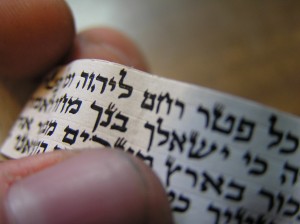
Another post from the Torah repair mines

Ever wonder what makes heavy Torahs so heavy?

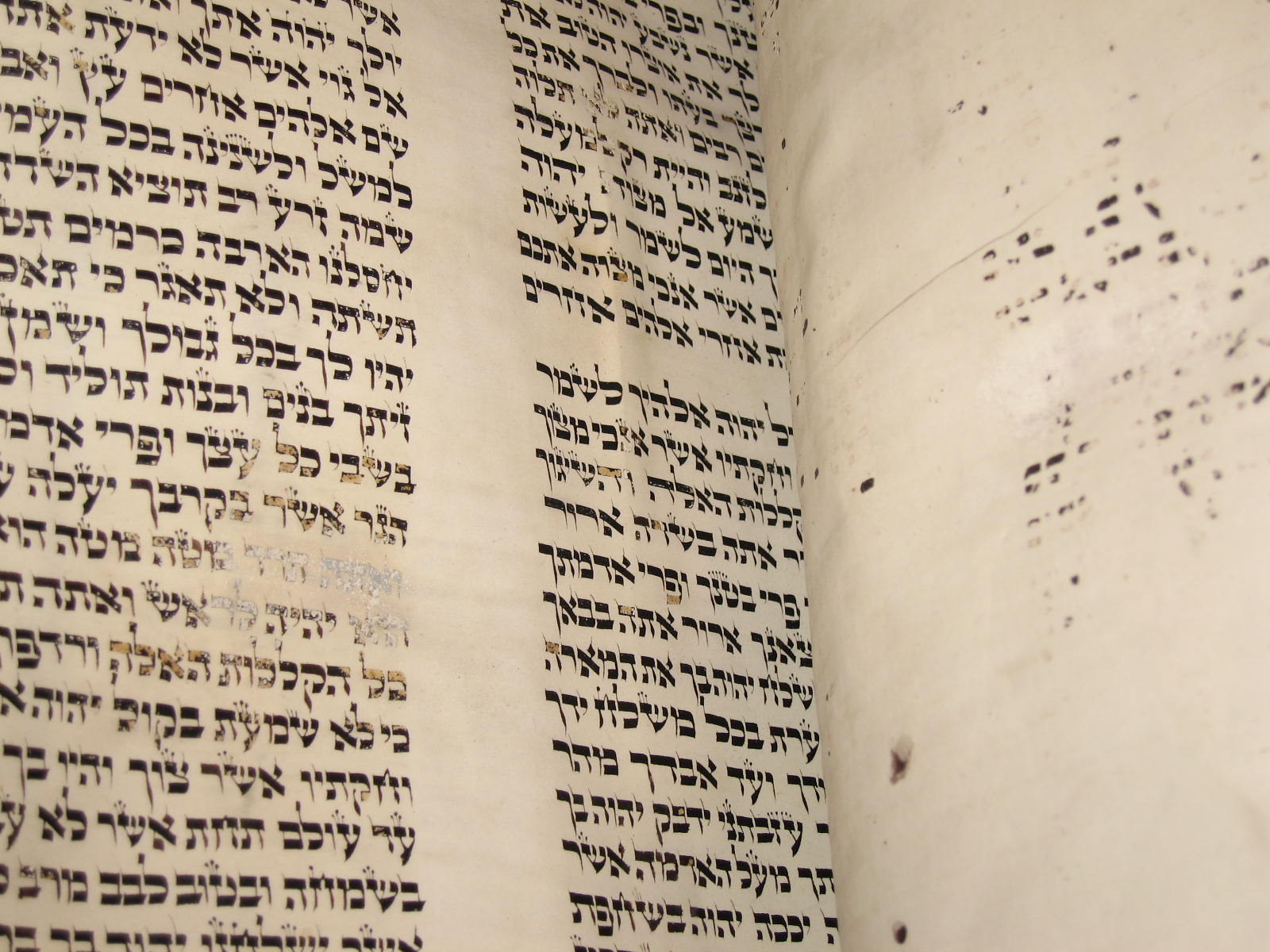
Size is part of it, of course. Before Good Electric Lighting and Universal Spectacles (in the eyecare sense, not in the entertainment sense), having bigger letters helped the reader. Line height these days is regularly 8mm, only two-thirds the size of the letters on older, bigger Torahs.

But another thing is coating. Torahs used commonly to be coated with a substance called log, a plaster-based white stuff that made the parchment pretty and white and heavy. See this next pic, klaf viewed from the back – clicky to see bigger – on the left, splotchily applied log; on the right, brush-marks.
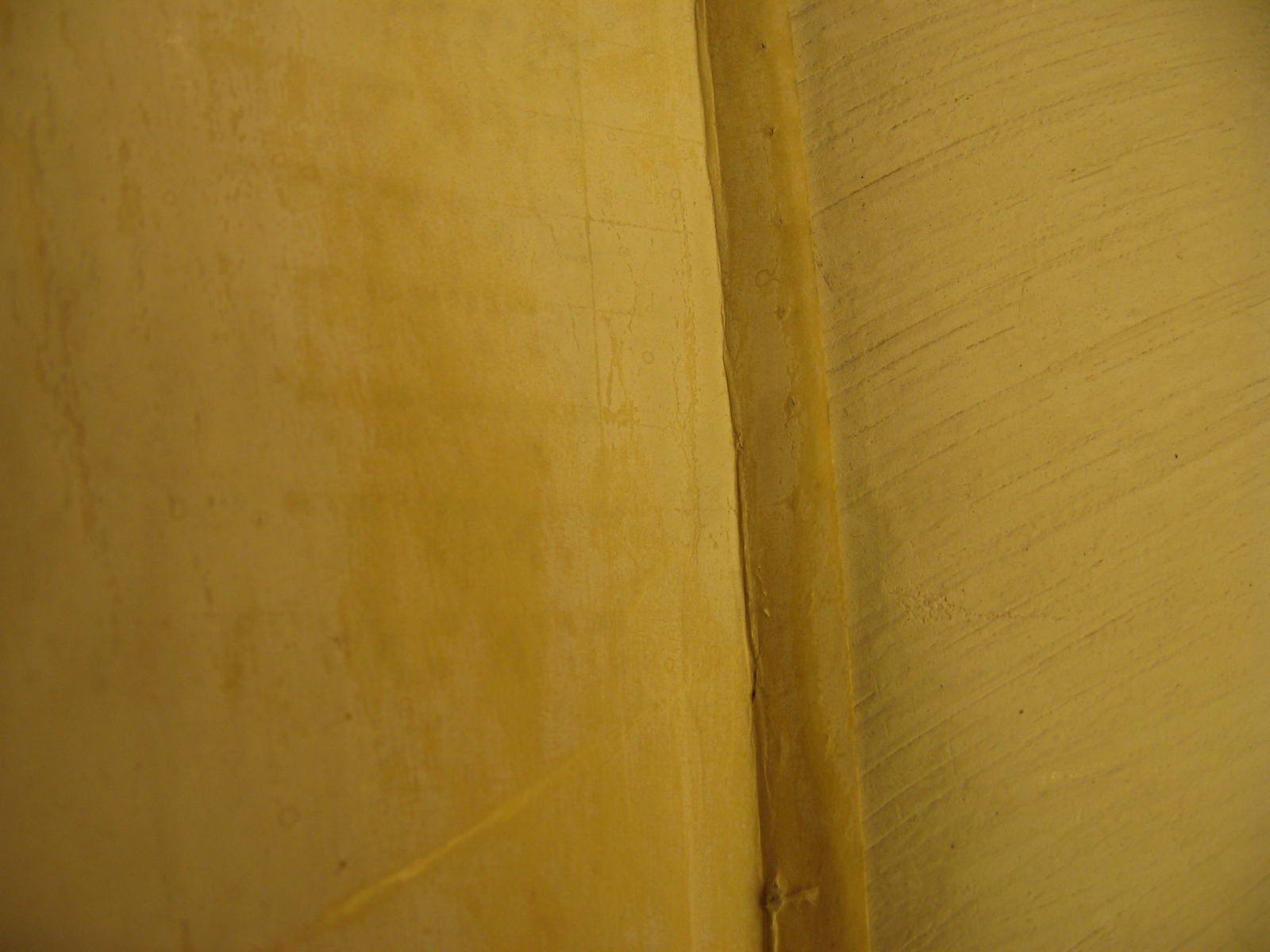
klaf
That’s basically a thin layer of stone, right there on the parchment, and the thing about stone is that it’s darn heavy.

I work with so many synagogues that have these enormous heavy Torahs that no-one can lift. They never get used because there’s no-one in the congregation who can do hagbah with them – they barely even get taken out on Simchat Torah, poor things. But these Torahs used to be used, once upon a time. What happened?

I already suggested that we can have smaller Torahs these days because we have better synagogue lighting and more people have specs. I also think that we need smaller Torahs these days because we don’t have people who can lift them any more. Where are the blacksmiths, the butchers, the carpenters? the carters, the porters, the men who worked with their muscles for a living and on Shabbat they lifted the Torah? They’ve all gone, replaced by power tools.

Without getting overly nostalgic for times when women routinely died in childbirth (except in today’s USA where they still do, lucky us!) and their children died in infancy and their husbands died young in industrial accidents, I do get a little sad for these big old Torahs, standing solid and beautiful in the backs of arons all over the country, their lovely big legible script unseen and unread, as we read our tiny light Torahs with our halogen lights and our contact lenses and bear them aloft with our feeble withered arms.
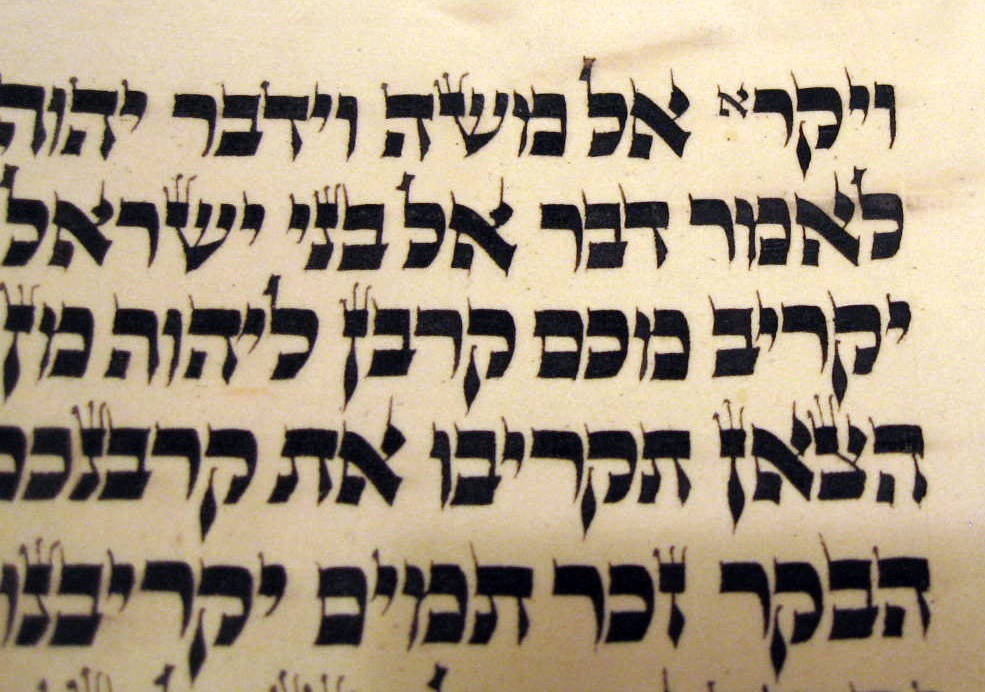
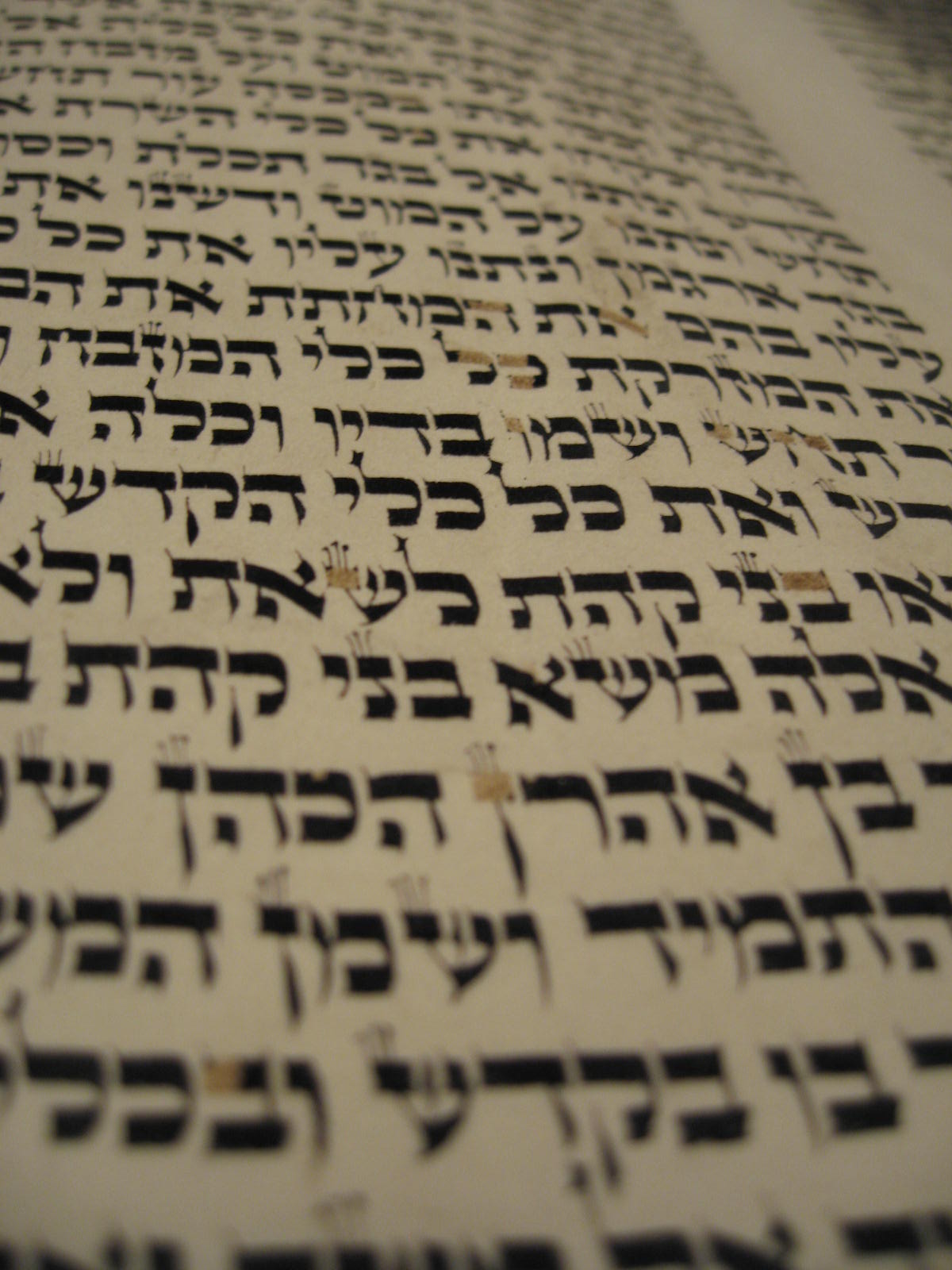
beautiful big letters


From the Torah Repair Mines

ink popping off torah

Places where ink has popped off and only the shadows are left. Clicky to see bigger.

The shadows don’t count, by the by, so if your letters look like this, they are pasul and need fixing.

These kinds of pesulim are funny. They really do just pop off. Pop! and they’re gone. Sometimes if it’s very bad you can look at the floor of the aron and see all these little flakes of popped-off letters.

I’d write more, speculating about how and why and so on, but I’ve been on my feet all day checking through nine sifrei Torah to see what they need by way of repairs, and I’m about wiped out.


cheers for readers!

Wow, you people are the best. Following a post containing some uncertainty about the availability of wool tank tops and cotton tzitzit (the one for the stringent, the other for the allergic-to-wool), Rebecca links us to a wool tank top, which even has wider shoulder pieces rather than spaghetti straps, to please both the large-chested AND the Mishnah Berurah – and the marvellous Yellow Hobbit, Jew With Spinning Wheel, is buying cotton in order to spin cotton tzitzit. Sign up here for your cotton tzitzit!

Talk about efficient. You people are IT. This should be a good omen for the year ahead. Shabbat shalom and happy new year, all.


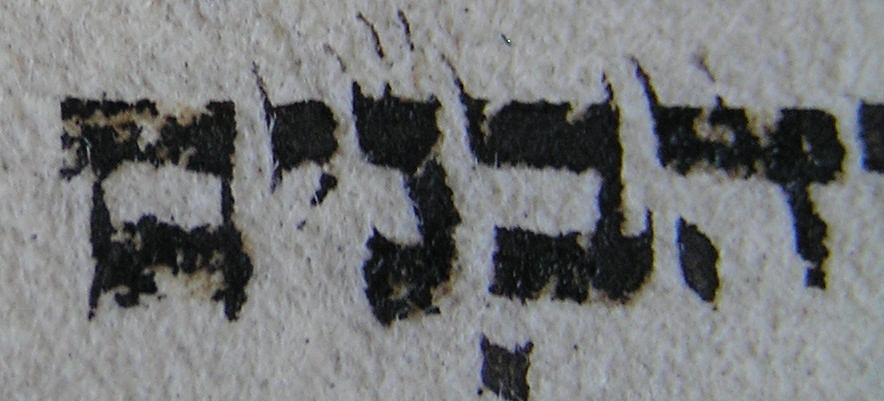
Letter nun – visual halakha

This is one of my favourite letter-halakhot, from the rules of how to make straight nun:
animated nun

אות נו”ן פשוטה תואר צורתה כמו זיי”ן וג’ תגין על ראשה אך שהיא ארוכה כשיעור שתהא ראויה להעשות נו”ן כפופה אם תכפפנה Its form is like a zayin, with three tagin on its head, but it is long, such that one could make bent nun out of it if it were bent round…

And from the rules of straight khaf, clarifying the point:

שאין חילוק בין פשוטה לכפופה רק שזה פשוטה וזה כפופה… …there is no difference between the straight and bent form save that one is straight and one is bent…

Many people have difficulty visualising (and remembering) this. I hope that the animation displayed here will help.

My favourite favourite letter halakaha, though, has to do with tagin.

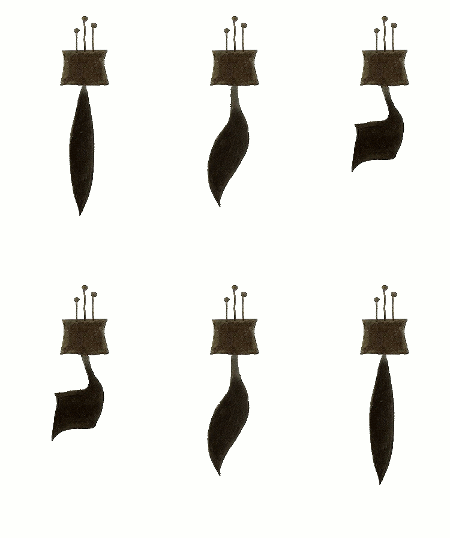
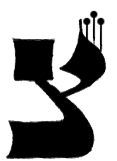
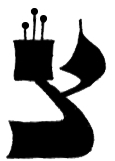
Tagin on right head of tzaddiTzaddi with taginThe very best sorts of people do mitzvot as soon as the opportunity presents itself, correct? And we read Hebrew from right to left, so surely we should put tagin on the right-hand head of letters such as tzaddi, which have more than one head? Like the image at left, in fact.
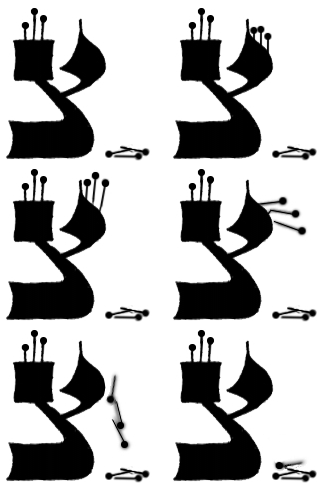
We don’t, though. We put them on the left-hand head, like the image at right. Why’s that?

Because if you put them on the right-hand head, they’d fall off. (Keset haSofer, 5:2, letter tet.)

Tzaddi and taggin

And this is why we make the right-hand heads curvy and upward-tilted.


Fun with ketubot – a pretty

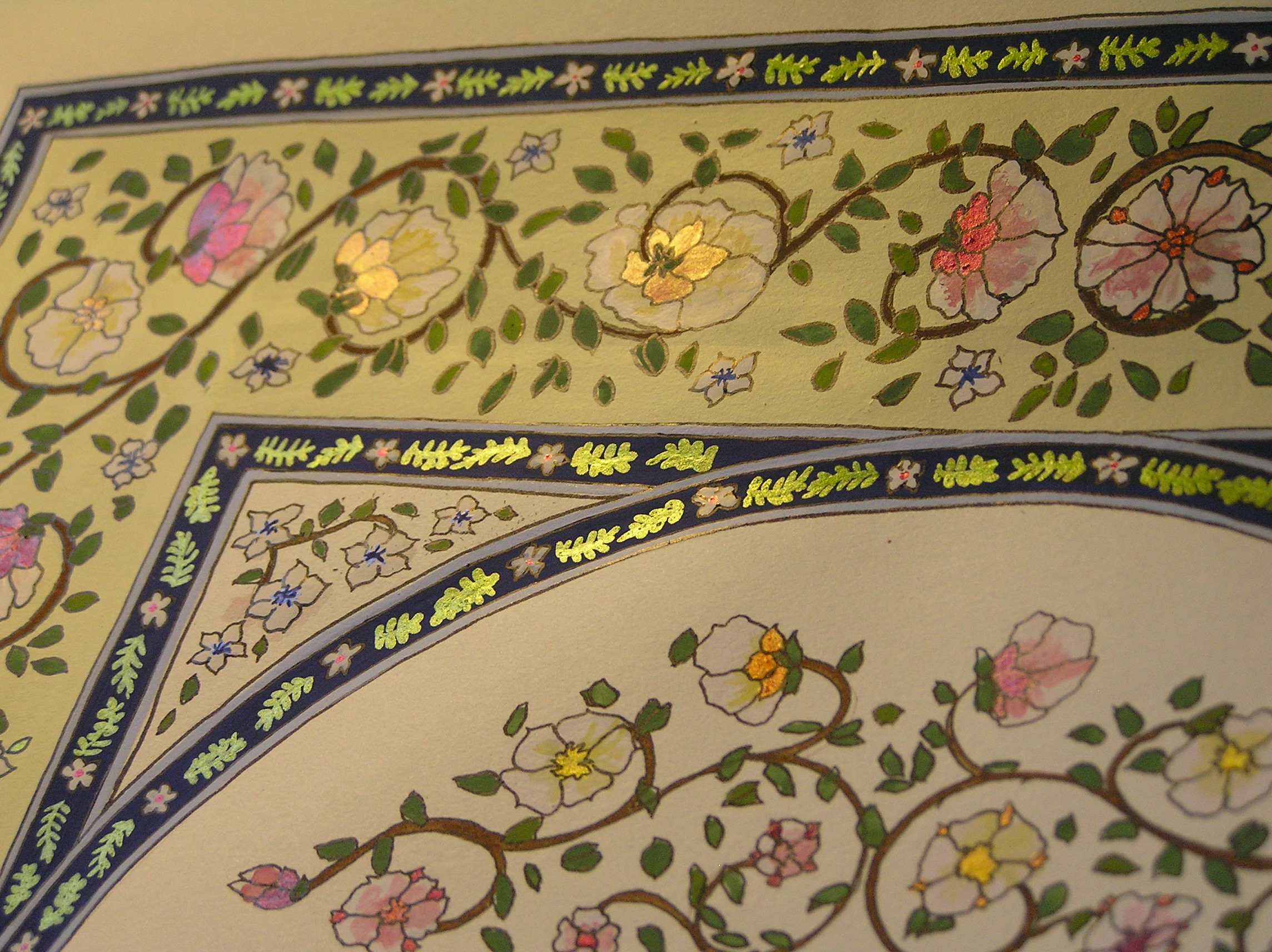
“We like Rivka,” said my client, “but we’d like something more elaborate.” (Click to see bigger Rivka.)

Rivka ketubah, elaborate versionSo this is what I did. (Click to see bigger Elaborate!Rivka.)
Rivka ketubah with sparkliesNote particularly the SHINY PAINTS that sparkle in the light! I like this very much.

Making Your Own Girl-Shaped Tallit Katan

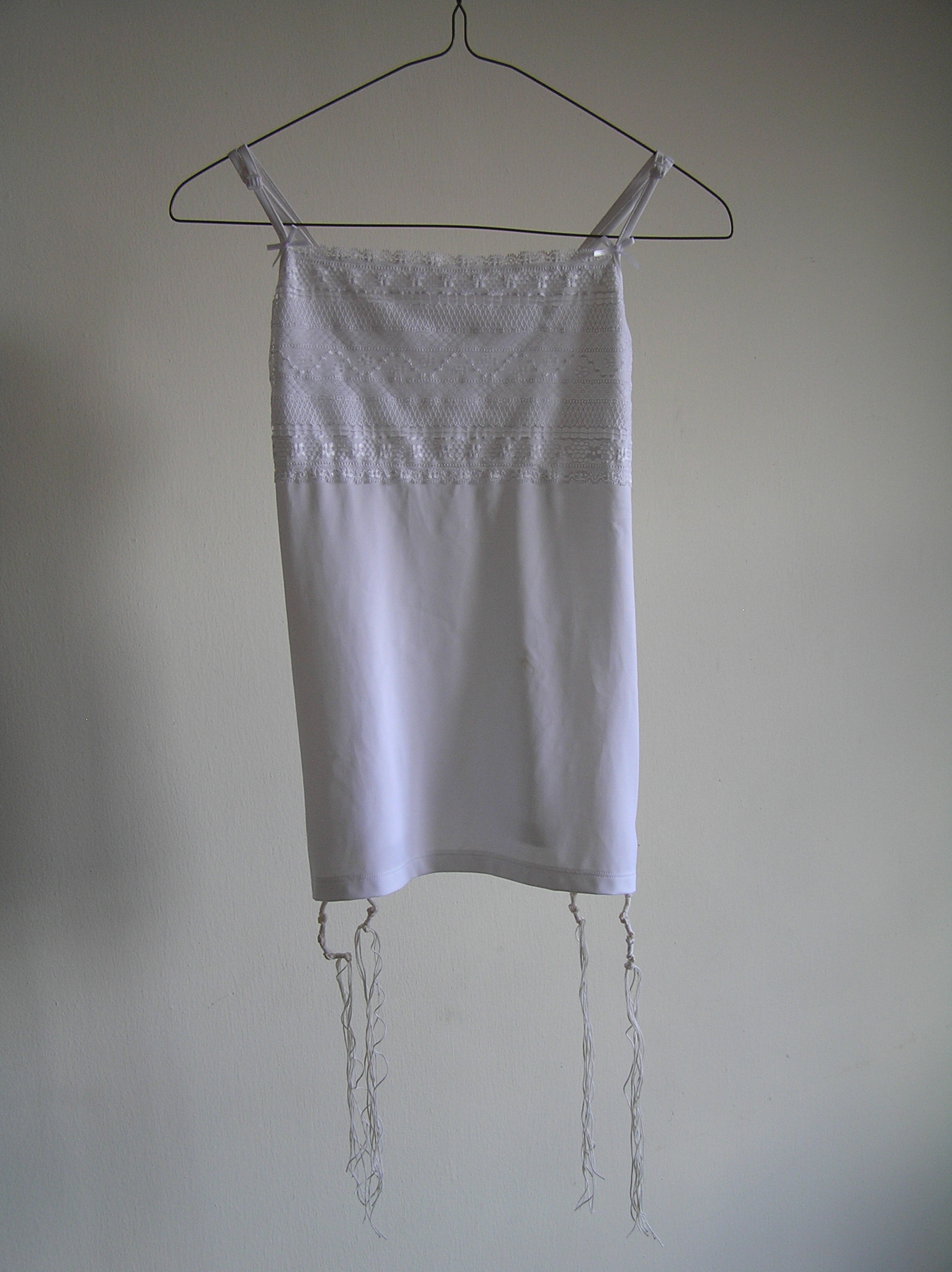
Girl-shaped tallit katan

Girl-shaped tallit katan

I couldn’t get to Limmud this year because of the snow closing all the airports. This is one of the sessions I would have given.

Wearing tzitzit under your clothes isn’t just something men do, but commercially-available tallitot katanot are definitely man-shaped. Bring a strappy top and come learn how to make a tallit katan that fits your body. Sewing skills not necessary.

Basically we’re going to go through the steps detailed in Danya’s classic post: take a strappy top, turn it into a four-cornered garment by removing stitches, make holes in it, and attach tzitzit.

(Translation for speakers of American English: strappy top is what you call a tank top.)

We’re assuming that you want to wear tzitzit, and that you’ve got over your “but that’s a MAN’s thing!!!” wibbles. People are welcome to discuss their wibbles, but that’s not the focus of the session, so I’m not providing sources on that here. Email me if you want sources.

Strappy top: fits under girl clothes, and is not a man’s garment.

Now, the Mishnah Berurah (16:1) says that the shoulder parts should be wide, and davka shouldn’t be straps: ויעשה הכתפים של הטלית-קטן רחבים כדי שיהיו נכרים ויהיה עליהם תורת בגד ולא שם רצועות. He seems to be saying that anything with shoulder-straps is not a garment and therefore doesn’t qualify for tzitzit. I rather think that, certainly in women’s clothing, the statements is a garment and has shoulder straps are not mutually exclusive, and therefore it’s probably okay to make a girl tallit katan out of a strappy top.

So, strappy top.

  • I don’t believe you can buy wool/linen blend strappy tops, but just in case: don’t buy a wool/linen blend.
  • Some say you shouldn’t put tzitzit on cotton or certain types of synthetics; if you’re of that camp, buy a mostly-wool top (Good luck with that. You might have to make one). If you’re not of that camp, go right ahead with your cotton or synthetic top. If you’re not sure, ask your rabbi or your google or read this and make a decision that’s consonant with your other values.
  • Some say there’s a minimum size for a tallit katan. Others don’t. Women’s clothes are generally smaller than men’s clothes; compare childrens’ sizes of tallit katan, which apparently hold that it’s all relative to the body size. You might care to find out which way your community holds on the minimum size for a woman’s tallit katan.

cece's tzitzis
Turning into four-cornered garment: slitting the seams 51% up the side.

  • The straps don’t count as part of the 51% reckoning.
  • Either rip the stitches or just CHOP THEM ALL OFF, WAHEY.
  • Optional sewing part: hemming the edges and putting in a few stitches to stop the seam tearing any further.

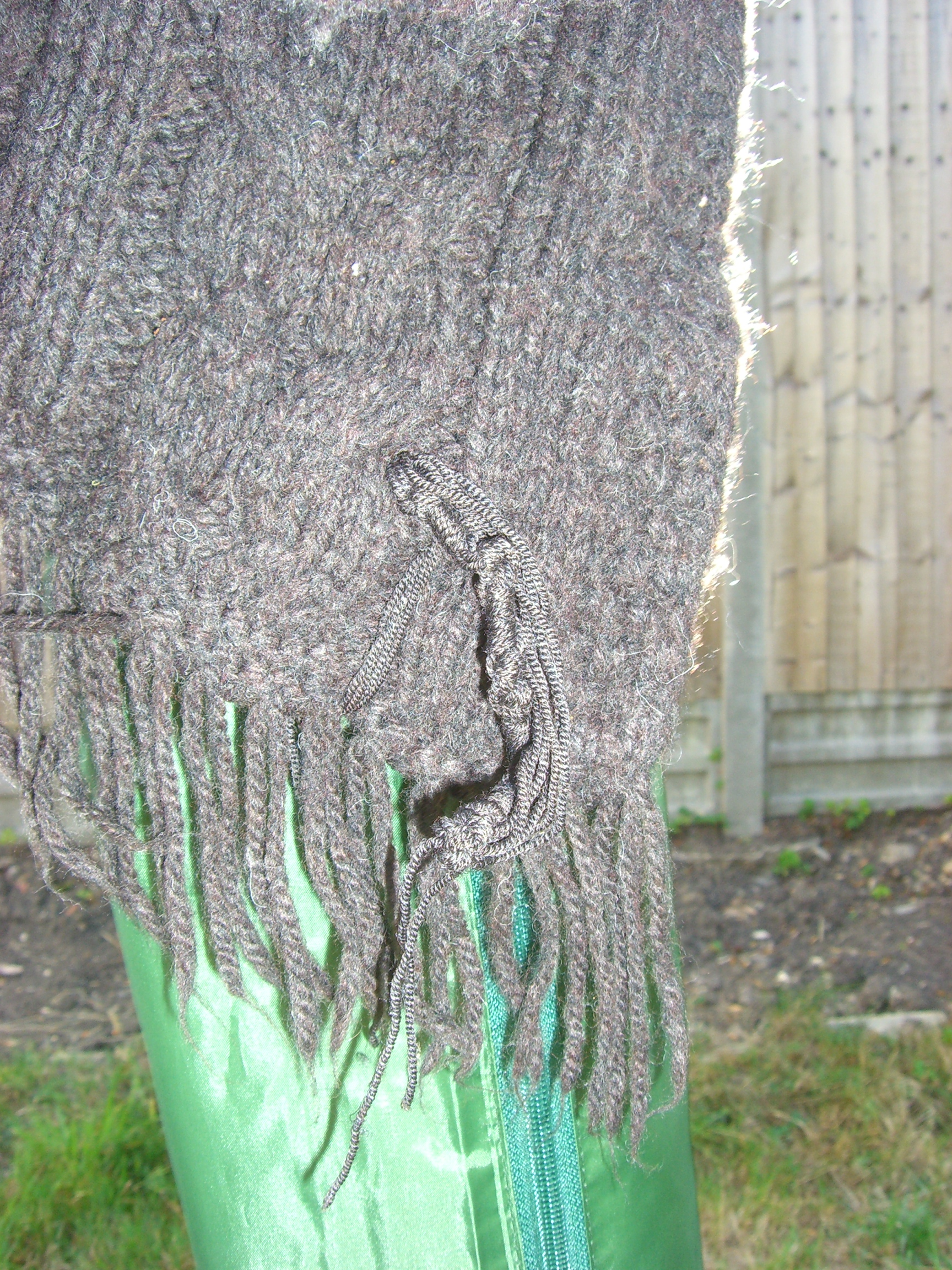
Reinforcing the corners:

  • With sewing, like a buttonhole, to stop the holes ripping open.
  • If the holes rip open, it’s still ok to wear, but it’s shvach.
  • I find that the armpit part goes yucky long before the corners start ripping, so I tend to skip this step. Then again, if I wore the tzitzis hanging out more often, they’d catch on things, in which case reinforced corners would be a good idea.
  • You can also reinforce the corners with awesome things like a certain JTS rabbi does.

Cutting holes:

  • They’re supposed to be two etzbaot from each side. 5cm gives you a bit extra to allow for stretching and such.

hannahstzitzitTying tzitzit:

  • There are about a billion squillion explanatory videos, blog posts, photos and websites out there explaining how to do it. Here’s the Jewish Catalog version.
  • When pulling halakha off the internet, often a good idea to compare several independent sources and make sure they’re all saying the same thing.
  • Remember to say leshem mitzvat tzitzit, that you’re doing this for the purpose of the mitzvah of tzitzit.

Girl Clothing:

  • There is a stringency to have the tzitzit be the same colour as the garment, but Ashkenazim (dunno about non-Ashkenazim) don’t bother with it any more. Still, girls’ clothes tend to be colour-co-ordinated, so if you like dyeing things, you might consider it, like this Hadar fellow has.

The order’s important. First make the four corners, then attach the tzitzit. Not the other way round.

On wearing them – depending how you view womanhood and tallit katan and the intersection of same, you may or may not want to be making a bracha when you put the things on. Again, ask your rabbi, ask your google, ask your friends.


Torahs and humidity

In my email:

Hi Jen! I hope it’s okay if I ask you a quick question — the school I’m working at just paid a bunch to have our Torah repaired — lots of letter were flaking off. The sofer said this was due to humidity and…mentioned something about silicate powder, but we don’t know how much to get. Do you know anything about this subject? Thank you so much and chag sameach!

Background: when parchment gets humid, it expands, slightly and unevenly. I’ve posted before about how parchment sometimes goes cockly on warm days; see old post How a soferet knows it’s spring, for instance.The dampness causes small amounts of expanding and contracting.

The ink doesn’t expand or contract at the same rate as the parchment, and that’s where we run into difficulties. You’re probably all familiar with the effects; you’ve seen it happen on a t-shirt after it’s been through the laundry a few times.

click to see bigger

click images to see bigger

Same thing happens to Torah letters, if they’re not well-guarded against humidity. Rapid changes are especially harmful.

badflaking

REALLY bad humidity has even worse effects – worst of all when you have actual condensation, which causes real water damage, very hard to repair – but even when it isn’t that extreme, it can still be pretty bad, as in this next picture. There, the back of the parchment semi-melted and glued itself to the letters; when the scroll was unrolled, the letters stayed stuck to the back of the parchment, except in the places where the back of the parchment stayed stuck to the letters.

Effects of bad humidity

So what’re you supposed to do? How do you guard against humidity?

Aron design is part of it. If your aron kodesh is built into an exterior wall, and not damp-proofed, you’re setting yourself up for trouble. If you’re storing your sifrei torah in the boiler room during the week, likewise. If the aron lives right next to the heating unit, likewise. If you’re in Florida in the summer, likewise. Storing your sifrei torah away from the more obvious sources of moisture is a good idea, where possible.

If you’ve got no clue whether your aron is humid or not, there are humidity-testing devices out there. Hardcore cigar people have hygrometers in their cigar arons; you might borrow one from someone’s uncle. You can also pick one up on eBay, and they’re quite fun to have around so that you can grumble in the summer (“it’s 80% humidity today would you believe”). Also, every Jewish community has someone whose hair goes frizzy on humid days; put them in the aron and see if they come out complaining about their hair…no, I’m just joking. More info on humidity and testing here.

Museums face similar issues – even if they’re not in the boiler room or in Florida, museums store valuable documents in climate-controlled rooms, to prevent the same kind of damage we’re talking about here. Air-conditioning serves pretty well for climate control; one can also use a regular powered dehumidifier. Of course, using masses of electricity has its disadvantages.

The non-electric option is silica gel, that stuff that comes in packets in shoeboxes. It sits in the aron and absorbs atmospheric moisture; very clever, very handy. One can buy it in packages to suit particular volumes; it comes with a little indicator-thing so you can see how it’s doing, and when it’s absorbed as much moisture as it can hold, you dry it out in the oven and put it back. Here’s a nice FAQ about silica gel and the practicalities of how much to buy.


Israeli Masorti responsum on sofrot

Been meaning to write about this since 2009…one of my colleagues in Israel asked the Masorti movement for their official position on lady scribes. Their response is here.

It’s in Hebrew, so I’m posting a summary of the main points:

* The Gemara and many major halakhic decisors say it’s a problem for women to write sifrei Torah, tefillin, and mezuzot.

* The Tur, the Rif, and the Rosh all say it’s a problem for women to write tefillin.
* But they don’t explicitly say it’s a problem for women to write Torahs.
* Neither does Masechet Sofrim.
* In fact Masechet Sofrim says if you may read Torah for the congregation, you may write.
* And our women may read.
* Therefore they may write Torahs.

Furthermore:

* People who are exempt from laying tefillin are invalid to write tefillin.
* Women are exempt from tefillin because it’s connected to talmud Torah.
* From which most people say women are exempt.
* But there are opinions saying otherwise, and also in our day, in Israel, we have ruled that women are not exempt from talmud Torah. The world has changed.
* So they are not exempt from laying tefillin either.

* And therefore they are totally kosher to write anything. QED.

I don’t buy this entirely.

Part of the halakhic philosophy of the Masorti movement is that if there’s a minority opinion, you can go with it, even if that opinion was ultimately rejected by Judaism as it developed. It’s totes fine to resurrect an opinion if it says something you want it to say. Another philosophical point is that “times have changed” is an absolutely valid reason for discarding something you don’t like. Once you have those two points on board, the above is sound reasoning and the answer unexceptionable – but getting those points on board takes a bit of work, and I don’t find them wholly convincing as I understand them. (I could also be missing the nuances. Feel free to explain in comments, if so.)

“Times have changed” is also part of contemporary Orthodoxy’s philosophy, but you have to work harder at using it as a justification for anything. “It’s not completely unprecedented, even though the majority eventually went against it,” likewise – if you can show that someone sometime did this thing, you’re much more justified in wanting to do it yourself, but that of itself isn’t an argument because you still have to deal with your inheritance – all the people who did something different subsequently. You can’t just write them off. This is why the above is desperately inadequate from an Orthodox perspective, and echoes in some form my own discomfort with it.

So if I don’t buy the above, but nonetheless I write sta”m – how do I justify it? I hear you asking, and I’m ‘fraid I’m not going to answer right now. I’m not so into the piece-by-piece incorporation of women into Jewish ritual life just at the moment. I could spend ages and ages coming up with contorted justifications for everything, but it’s an activity I find distasteful at present, so you’ll have to figure it out yourselves from the stuff on my site. Oh, and anyway, this was just a post about the Masorti thing, not a presentation of Jen’s Philosophy of Halakah. So yes – this is what the Masorti position in Israel is. Jolly jolly.


Crikey. We’re on Regretsy.

Tefillin Barbie is on Regretsy, people. Given that Regretsy exists to mock the living daylights out of dreadful things on Etsy…lucky old us.

The comments are particularly fine, I must say. It’s good to be reminded of how the world thinks from time to time.

For the record, I sell scalpels and blades because I teach scribes, and one thing scribes learn to do is erasing, and erasing takes the edge off a blade quicker than you can say “knife,” so to speak.

Also, I charge $130 for her because she’s fiddly as all hell to put together and I don’t have a factory full of Korean six-year-olds to do it for me.


What dictates variation in tefillin prices?

In short – the amount of time it takes to produce them. Every bit of a pair of tefillin is made by hand, and the longer it takes to do, the more it costs.

Tefillin klaf and fingersThe biggest price factor of a set of tefillin is the parchments. They have a lot of writing on them, and the writing is very small, even in big tefillin like in the picture (see? Big tefillin have four lines of writing in a space narrower than my finger. BIG tefillin). Small writing is hard to do well, so a good set of tefillin parchments takes a lot of time and effort to produce, which makes good parchments expensive.

Cheap tefillin have been written faster. Often, they’ve been scribbled such that the letters are barely kosher. “No-one will see,” the harried scribe thinks. “What’s it matter if they’re a bit iffy?” and iffy they are. Also, the cheapest tefillin are written on parchment which has been treated to make it easier to scribble on – but the treatment hastens the decay of the letters. So even if you’re lucky and the letters are just about kosher, they’re going to decay in ten years. This is why it is possible to buy very cheap tefillin, and why it is not the best decision.

The issue of coated parchment aside, tefillin parchments vary in quality. You can buy parchments where the writing is kosher but nothing special, or you can go all the way up the scale and buy parchments which are miniature marvels, so there is a fair bit of variation in price there, say between $400 and $1000+.

The boxes are the other main factor. Tefillin boxes are quite complicated inside (more information here), and there are different ways of making them. The easiest way to make tefillin boxes is with a scissors-and-glue exercise, cutting and folding and sticking the parchment until you have a box. But you’re supposed to make them from “one piece” of leather, so the more folding and the less cutting and sticking, the better – and the best way of all is to mould one piece of leather into a box shape, so that there’s no cutting and sticking at all. These are tefillin gasot, sturdy tefillin. Making them takes a lot of time and needs heavy-duty presses, so tefillin made this way are more expensive. The cutting-and-sticking sorts are called peshutim; the better ones are called peshutim mehudarim. Here too, some gasot are just gasot, and some gasot are really beautiful – you get what you pay for.

Compare to shoes – cardboard flipflops will keep your feet clean for a while, Crocs count as footwear, but decent shoes look good, last a long time, and are worth investing in; so too peshutim with scribbly parchments are just about okay, peshutim mehudarim with kosher parchments count as tefillin, and gasot with beautiful parchments are good tefillin you can be proud of that will last a long time.

So what should you be paying? If you’re paying less than $200 for new tefillin, you’re probably buying an inferior product that may not even be kosher, and you’re probably going to have to shell out for another set in ten years’ time. Better to invest $600 in a good set that will last your lifetime and can be passed onto your kid after you.