Masechet Soferim, chapter 2, 16-20

טז) לא יעשה חציו גויל וחציו קלפים, אבל עושה חציו גויל וחציו צבאים, אף על פי שאינו מן המובחר. He shouldn’t do half of it on gevil [=a thicker type of cow parchment, more like leather] and half on klaf [a thinner type of parchment made by splitting a cow skin laterally]. But he may do half on gevil and half on deer [deer also comes out thickish with a similar texture to gevil], even though that isn’t the nicest way of doing it.
יז) אין דובקין בדבק, ולא כותבין על גבי המטלית, ולא תופרין במקום הכתב, אמר ר’ שמעון בן אלעזר משום ר’ מאיר שדובקין בדבק, וכותבין על גבי המטלית, אבל אין תופרין במקום הכתב מבפנים, ותופרין במקום הכתב מבחוץ. One does not stick it together with glue, and one doesn’t write on patches, nor sew in the bit with the writing. Rabbi Shimon ben Elazar said in the name of Rabbi Meir that we do stick it together with glue, and write on patches; but we don’t sew it in the bit with the writing on the front side, and we do sew in the bit with the writing on the back side. [You can do this if you are working with unsplit hides; they’re thick enough that you can stitch through only part of the thickness of the material. I think this is what it’s talking about. ]
יח) צריך שיהא משייר מלמעלן ומלמטן, כדי שלא יקרע, ומאחר ליה על מחייה, מלמטה למעלה ומלמעלה למטה, הלכה למשה מסיני. One must leave a bit [unsewn] above and below, so that it shouldn’t tear. And one has to go back over the sewing – from bottom to top, and from top to bottom – this is halakha from Moses at Sinai. [I think it’s saying that you make a backstitch at each end, but I’m not sure. The various other things I’ve read haven’t discussed this one. Remember a few days ago I said this text isn’t authoritative?]
יט) ספר שנקרע טולה עליו מטלית מבחוץ. A sefer which tore – you put a patch on the back.
כ) כל האותיות הכפולים באלפא ביתא, כותב את הראשונים בתחילת התיבה, ובאמצע התיבה, ואת האחרונים בסוף, ואם שינה פסול. The letters of the alphabet for which two forms exist – you put the former at the beginning of the word, and in the middle of the word, and the latter at the end of the word, and if you deviate from this, it is invalid. [Note to self: look at this in the context of the development of final letterforms, sometime or other.]

Masechet Soferim, chapter 2, 12-15

יב) ובקלפים לא נתנו שיעור, אלא כל מה שהוא רוצה, מוסיף, ובלבד שלא יפחות משלשה דפין. There is no defined measurement for the klafim; whatever one wants, he may add, provided he does not go under three columns.
יג) יריעה שבלת, לא יטול שנים ויחזיר שנים, אלא נוטל שלשה ומחזיר שלשה, ומה שהוא מחזיר, כמדת כתב הראשון. A worn-out sheet – one does not remove two [columns] and return two, but one may remove three and return three, measuring the same as the original.
יד) שיעור הדף כדי שיהא רואהו, ובקטן לא יפחות מטפח, ר’ יוסי בר’ יהודה אומר לא יפחות משלש אצבעות. A column should be sized so that he can see it, and at the smallest it should not be less than a tefach [wide; see above about them being six tefachim high]. Rabbi Yosi in the name of Rabbi Yehudah says, he shouldn’t make it smaller than three finger-widths.
טו) ולא יעשה חצי ארכו יתר על רחבו, ולא רחבו יתר על ארכו, אבל ממצעו הוא, ועושה אותו מן המובחר. He should not make half its length [=column height] greater than its width, and its width should not be greater than its length, but he should do it between, to do it as nicely as possible [That is, width < length < 2*width.]

Masechet Soferim, chapter 2, 11

Okay! This bit is what got me started on this in the first place.

יא) אבל בשיטין נתנו טעם, כמסעות ארבעים ושנים, וכרבבות של ישראל ששים, וכזקנים של ישראל שבעים ושנים, וכתוכחות של משנה תורה תשעים ושמנה, הכל לפי הכתב.

כמסעות, שנאמר ויכתוב משה את מוצאיהם;

כרבבות ישראל, שנאמר כתב לך את הדברים האלה כי על פי הדברים האלה כרתי אתך ברית ואת ישראל, מה ישראל בששים ריבוא אף שיטיה של תורה בששים;

וכזקנים שבעים ושנים, שנאמר אספה לי שבעים איש, וישארו שני אנשים במחנה, והמה בכתובים, שבעים ושנים;

וכתוכחות תשעים ושמנה, שנאמר אם לא תשמר לעשות את כל דברי התורה הזאת.

But for the lines, we have a reason: like the journey-stations, forty-two; and like the myriads of Israel, sixty; and like the elders of Israel, seventy-two; and like the Admonitions in Deuteronomy, ninety-eight; all according to one’s writing.

The journey-stations, as it says, Moses wrote their journeys (Numbers 33:2).

The myriads of Israel, as it says, Write thou these words, for after the tenor of these words I have made a covenant with thee and with Israel (Exodus 34:27); just as Israel are in sixty myriads, so too the lines of the Torah are sixty.

And the seventy-two elders, as it says, Gather to Me seventy men of the elders of Israel (Numbers 11:16) and There remained two men in the camp and They were numbered among the elders (ibid. 11:26), which makes seventy-two.

And the ninety-eight admonitions, as it says, If you do not observe and obey all the words of this Torah. (Deuteronomy 28:58)

If you have a ninety-eight line Torah in your shul, I would like to see a photograph. Please.


eeny weeny torah scroll fun

Here’s a video featuring a very tiny totally kosher Torah scroll.

The video’s more concerned with the accoutrements, a little aron kodesh and the usual silver ornaments for a Torah scroll, than with the scroll itself. They’re made by Bezalel School-trained artist Shuki Freiman, and they are breathtakingly beautiful, utterly and completely. Seeing them is a treat. I’m just a bit sad that they don’t talk about the scroll; they just say that it’s less then five inches tall and written by a sofer in Bnei Brak. No close-ups.

Shabbat shalom! Hope you bought your sushi this week. I bought mine. California rolls, yay.


Masechet Soferim, chapter 2; 8-10

ח) מניחין בסוף הדף כדי הקיפו, ואינו צריך לעשות כן בתחילתו, ולתורה מיכאן ומיכאן; לפיכך גוללין את הספר לתחילתו, ואת התורה לאמצעיתה. One leaves at the end of the [last] column enough to wrap around it. It is not necessary to do this at its beginning. For Torah, on both sides; accordingly, one rolls the book from its beginning, and the Torah from its middle.
ט) ואין פוחתין את התורה ביריעה מארכה של תורה, ששה טפחים. One doesn’t reduce the Torah, in a sheet from the length of the Torah, more than six tefachim. [Yes, this is truly painful translation. Sorry. It means a sheet of Torah ought to be six hand-breadths high.]
י) ואין פוחתין ביריעה פחות משלשה דפין, ולא מוסיפין על שמנה. One doesn’t make a sheet with fewer than three columns, or more than eight.

As I said last time, for pity’s sake, don’t go trying to use this to write the Torah.


from the Torah repair mines

Isn’t this sweet? It’s the little letter aleph in “Vayikra,” but it’s a particularly tiny version, where the height of the whole letter aleph is same as the width of the quill used for the other letters.

vayikra

The regular letters in this sefer, by the way, were 7mm high. Huge!


Why you should have sushi for Shabbat this week

Here’s a quote from Eric Ray’s book Sofer: The Story of a Torah Scroll:

…no “base metals” may be used in making or repairing these texts. Base metals are the metals used in everyday tools. That means that no iron, no steel, no brass, no copper, and no bronze can be used. Base metals are the kinds used to make weapons. Nothing that is used for killing can be used in making a Sefer Torah, a Mezuzah, or a pair of Tefillin.

Strictly speaking, this is something of an overstatement, but let’s explore the sentiment. Our aversion to metal implements starts in the Torah, in Exodus 20:22:

If you build an altar of stones to me, you shall not use dressed stone; if you lift your sword to it you pollute it.

And in 1 Kings 6:7:

In building the House, stones ready-dressed were brought, so that neither hammer nor axe nor any iron tool was heard in the House during its construction.

Rashi, the most widely-accepted biblical commentator, explains:

The altar was made to lengthen man’s days, and iron was made to shorten man’s days; it isn’t appropriate to lift something which shortens against something which lengthens. Also, the altar brings peace between Israel and their heavenly father, so one should not use upon it anything which cuts and destroys.

That’s some pretty powerful anti-iron associations.

Now, from ChinaDaily.com, an element of Chinese culture:

Chinese people, under the cultivation of Confucianism, consider the knife and fork bearing sort of violence, like cold weapons. However, chopsticks reflect gentleness and benevolence, the main moral teaching of Confucianism. Therefore, instruments used for killing must be banned from the dining table, and that is why Chinese food is always chopped into bite size before it reaches the table.

This fascinates me because it suggests that it’s not just Jews who are made uneasy by iron tools. I have no idea how much cross-cultural exchange there may have been, but it’s interesting that such a concept should take hold in such different places.

The haftarah to parashat Behukotai contains a line from Jeremiah 17:

Judah’s guilt is written with an iron pen…

Judah here means the Jews; Jeremiah is talking about how the Jews have messed up again. It seems likely that Jeremiah didn’t choose an iron pen just because of its material properties. Iron has nasty overtones. A set of sinister connotations, if you will.

Looking forward, to today’s sofer. It’s not actually per se forbidden to use base metals, according to various authoritative halakhic sources, but many soferim hold that it’s utterly inappropriate, for their associations with violence and the incompatibility of this with the ideals of Torah; Torah, like the altar, is supposed to lengthen man’s days and promote peace between Israel and God. Hence the widespread use of alternative tools – precious-metal substitutes such as gold and silver; non-metal tools such as glass; tools with positive symbolism such as surgical scalpels.

In particular, the iron pen, associated by Jeremiah with the numerous times the Jews have failed to play straight by God. The iron pen carries not only associations of violence but also of disregarding the Torah. It’s not necessarily the best tool for the process of creating that selfsame Torah. We are encouraged to use quills, so that we can create Torah without these overtones.

Or we could use chopsticks.

The astute will note that this is a repost with edits. It’s still interesting :P


Masechet Soferim, chapter 2, 1-7

I was looking up the bit about the number of lines per column (thanks, MarGavriel), and I figured I might as well review (and translate, because that’s how I learn best) the whole chapter.

Various people describe Masechet Soferim as a rulebook for writing the Torah. It really isn’t. It’s a minor talmudic tractate containing a mish-mash of interesting things, many of which are connected to writing Torah scrolls, but it isn’t a rulebook. It doesn’t even mention a whole lot of things we hold to be rather important; you also have to remember that it is a Lesser Source; many of its statements are contradicted by more authoritative talmudical tractates. So for pity’s sake, don’t go trying to use this to write the Torah. Learn the Keset haSofer instead.

Text pulled from responsa.co.il. If you appreciated this, buy a subscription. Translation by me without looking up any commentaries or parallel texts, so don’t expect perfection.

א) מניחין בין שם לשם כדי שיהא ניכרין, ובאותיות כדי שלא יהא מעורבבין. אם עירב את האותיות, או שהפסיק באמצע השם, אל יקרא בו. One leaves between word and word enough that we can recognise it, and between letter and letter enough that they aren’t joined together. If one joined the letters, or made a gap in the middle of a word, it is not to be read from.
ב) מניחין בין שיטה לשיטה כמלא שיטה, ובין תיבה לתיבה כמלא אות, ובין אות לאות כמלא שיער, ובין דף לדף כמלא גודל, עשה סוף הדף לתחילתו פסל. עירב את האותיות, או שהפסיק באמצע השם, אל יקרא בו. One leaves between line and line the amount of a line; and between word and word as much as a letter; and between letter and letter as much as a hair; and between column and column as much as a thumb’s-width; if one made the trailing edge of a column [i.e. the left-hand edge] up against the leading edge [of the next] it is pasul. If one joined the letters, or made a gap in the middle of a word, it is not to be read from.
ג) מניחין בין לדף לדף. שם בן ארבע אותיות, לא יכתוב שתים בסוף הדף, ושתים בין דף לדף, אבל לא משם קטן, ואם היה שם קטן בפני עצמו של שלש אותיות אסור. Leaving between column and column: a word of four letters should not be written two at the edge of the column and two in the space between – but not from a little word, and if there is a little word on its own of three letters, it is assur.
ד) מניחין בין דף לדף, בתורה שתי אצבעות ריוח, ובנביאים ובחומשים ריוח גודל אחד. One leaves between column and column – in Torah, two finger-widths’ space, and in prophetic books and single books of the Torah, one thumb-width.
ה) מניחין מלמטן בתורה ריוח טפח, ומלמעלן שלשה חלקים בטפח, ובנביאים ובחומשין שלש אצבעות מלמטן, ושתים מלמעלן; כאן וכאן אם רצה להוסיף יוסיף, ובלבד שלא יהא הרוחות מרובין מן הכתב. One leaves beneath – in Torah, a tefach-space, and above, three parts of a tefach; in prophetic books and single books of the Torah, three finger-widths beneath and two above. In both, one may make them bigger if he wishes, provided that the blank space is not bigger than the writing.
ו) מניחין בין ספר לספר, בתורה ריוח ארבע שיטין, ובנביא של שנים עשר שלש שיטין. One leaves between book and book – in Torah, four lines; and in the Twelve Minor Prophets, three lines.
ז) גמר כל הספרים, ושייר בו דף אחד, עושה אותו יריעה אחת קטנה, ואינו נמנע. If one finished all the books, and one column remained, he makes of it a little sheet, and that is okay.

All right. There’s twenty of these. I’ll give you the rest later.


Responsible fonting: scenes from the inbox

A question from someone typesetting a ketubah:

“I’m using typefaces that have a hand-done feel to them, but obviously they are mechanical. There are some typefaces (Guttman Stam and Guttman Stam 1) that recreate a sofrut look. One of these uses taggin and one is plain. I have no pretension to be following sofrut laws, but I’d prefer to use a typeface that won’t look completely ridiculous or pretentious to somebody familiar with the customs of how these documents are traditionally written… Is it appropriate to use the font with the taggin as the general typeface, or are those letters with taggin only reserved for special instances of letters?”

That is…instead of going for something instantly identifiable as “font that came with your computer,” like this:

font-font

she’s going for something that is both prettier and evokes some of our more cherished solemn traditions, like this:

stam-font

“I just had this nightmare scenario in mind where I had my beatuiful, tag-saturated ketubah on my wall and then became friends with someone savvy in sofrut who looked at it and saw the equivalent of an entire contract composed entirely of those giant gothic storybook letters that are supposed to come at the beginning of a paragraph in an illuminated manuscript”

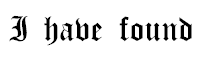
Like this, that is to say:

gothic-allcaps

where it ought to look like this:

gothic

The answer: in our days, tagin are letter-specific, not context-specific; they generally occur on the letters שעטנז גץ only. You can use a font with tagin without looking like an utter chump.

Now, some people do hold that since this is the script used for sifrei torah, tefillin, and mezuzot, it should be reserved exclusively for use on those documents; that using sta”m script on things such as ketubot isn’t appropriate. I don’t hold that way personally, and this isn’t even a script we’re talking, it’s a font, so it’s not really even the same thing since you basically can’t use it for sta”m anyway.* Still, something to bear in mind; if one’s community fetishises the script, best not to use it for a ketubah.

I’ve even heard the view that since this is the script used for gittin, tagin aren’t appropriate for ketubot – gittin being divorce documents and tagin apparently being a kind of bad-luck talisman when employed in wedding contexts. Except that we don’t put tagin on the letters in gittin, so that one kind of falls down at the starting post, but underneath what it’s saying, again, is that there’s a desire to keep these letters apart and special – “gittin” is just the language used to clothe that concept.

But some people** take it in the other direction, and say that since this is the script used for our most important and significant documents, it makes sense to use it for a ketubah.

Which is fair enough, so long as one does it with awareness.

* Not without some innovative responsa, anyway
** I haven’t got published sources for either of these views. This is just “I talked to some rabbi, and he said…” territory.


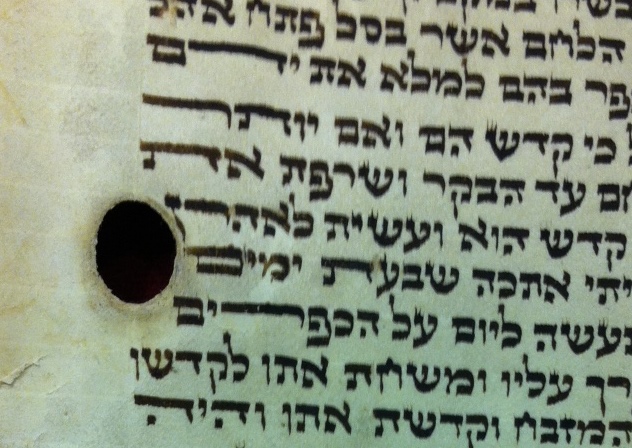
holes in klaf

See how the scribe here has adjusted his lines to fit around the hole in his klaf?

Hole in klaf

Rabbi Dan describes this perfectly: “a loving reminder that we live in a very, very wealthy time when we can have perfect klafim in our synagogues, and admiring the sofer who adapted to the needs of the moment.”