This is based on a talk I gave a few weeks ago, on Shabbat Bereshit. It concerns the reading for the second year of the triennial cycle, which starts in chapter 4, in which God creates beings with plurality, male and female.
זה ספר תולדות אדם ביום ברוא אלקים את האדם בדמות אלקים עשה אותו, זכר ונקבה בראם, ויברך אותם ויקרא את שמם אדם ביום הבראם
This is the book of the generations of mankind. On the day that Elohim created mankind, in the image of elohim he made it; male and female he made them. And he blessed them, and he called their name mankind on the day of their creation.
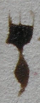
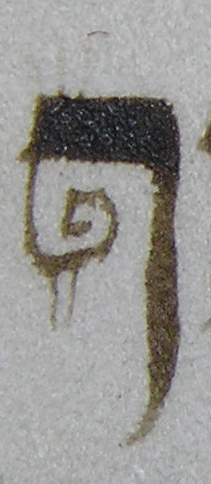
 In the sefer Bet Haverim read from this year, the first letter of the paragraph looks like the image at left, ordinary zayin.
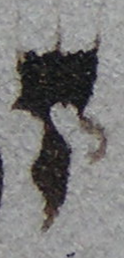
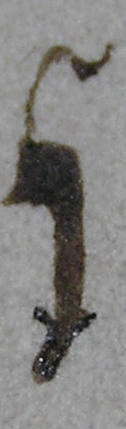
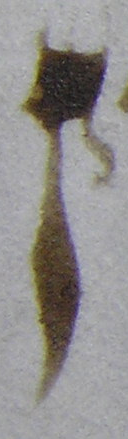
In their new sefer, the first letter looks like the image at right. The zayin has a little curl on its right-hand side.
This new sefer has a lot of little annotations like this. The annotations invite you to look deeper.
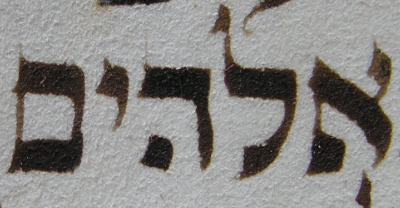
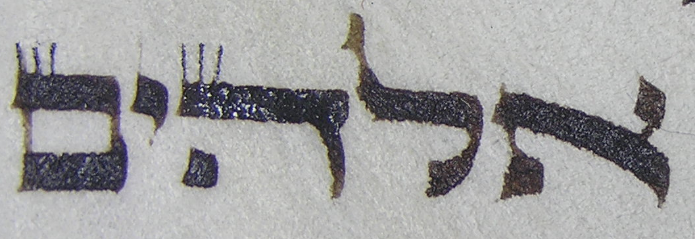
One commentator says these may be functioning as delete marks; if you ignore the letters marked up by the tagin, you are left with the singular word El, making the point that although Elohim seems to be a plural word, you should be in no doubt that it is a singular quantity. In context, this could be a commentary on the nature of the beings created by God; although the language suggests that they are plural (compare the interpretation that says originally these beings were multi-gendered dual-body creatures which were separated only at a later date), you should make no mistake that they were actually singular.
Tagin also invite us to think about additions, rather than deletions. What does a set of three tagin bring to mind? Maybe it invites us to look for threes. For instance, look in the verse, at the letters following the three instances of the word adam. Alef-bet, alef-bet, alef-bet. Av, av, av. Three fathers. What other threes come to mind?
We’re asking what might be hinted at by three tagin on top of the regular letters. This might remind us of pardes–peshat, remez, drash, sod–and the three extra exegetical layers which ride above the plain text.
You might ask why all this exegesis is necessary. Why not just write it all out explicitly? Surely that would be easier. Well, one answer is that God was being merciful–has hakadosh barukh hu al mamonam shel yisrael–if it was all written out explicitly, it would be all but impossible to fulfil the mitzvah of ketivah sefer Torah.
Which sounds like a joke, until you consider the Talmud, which is the fifth-century attempt to do just that, write everything down explicitly, and how many complete copies of the Talmud–the central text of rabbinic Judaism–survived the Middle Ages? One. Just one. The bigger the book, the harder it is to ensure its survival.
So the traditions of extra tagin serve as easy-to-write reminders of extra content. Footnote markers, a hint that something extra is going on. The challenge is to remember the footnotes, a challenge which we have largely failed at this point.
So in our verse, what’s going on? To explain one idea, first we need to talk about the mechanics of writing God’s name.
Before writing the combination of letters representing God’s name, a scribe has to have the intention that God is the subject. Consider the letter string alef-lamed; sometimes it means God, sometimes it means a god in general, sometimes it means towards, sometimes it means don’t. Before you write it, you need to know which it is; we say it’s the thought that counts and the scribes’ code takes that literally.
Generally, the meaning is clear from context; it is holy, or it isn’t. But sometimes it isn’t clear. Sometimes it’s ambiguous, and will remain so till the coming of Elijah. In our verse, the first Elohim has the status of definitely-holy, and the second has the status of permanently-ambiguous. Was man really created in the literal image of God?
Consider those three fathers, above; one opinion thinks that the three fathers were created in the literal image of God, but subsequent generations were not. We also find these tagin in the first paragraphs of the first creation story, where three tagin emphasise hu v’lo malakh, hu v;lo saraf, hu v’lo shaliach–words we recognise from the Passover liturgy: He and not an angel; He and not a seraph; He and not a messenger. It’s possible that the tagin here, on the ambiguous Elohim, are a tradition expressing an opinion on the question.
There are a great many threes that three tagin could be hinting at. We’ll finish with another three, the three judges on a bet din. Elohim means judge, and the commentator Sforno says that our verse means mankind was created baal bechira, a master of choice, a possessor of free will. Three tiny lines serve as a powerful reminder of humanity’s capabilities and responsibilities.
Planting
(Meant to post this last week, sorry.)
Leviticus 19:23–And when ye shall come into the land, and shall have planted all manner of trees for food, then ye shall count the fruit thereof as forbidden; three years shall it be as forbidden unto you; it shall not be eaten.
Except in our sefer it’s more like this:
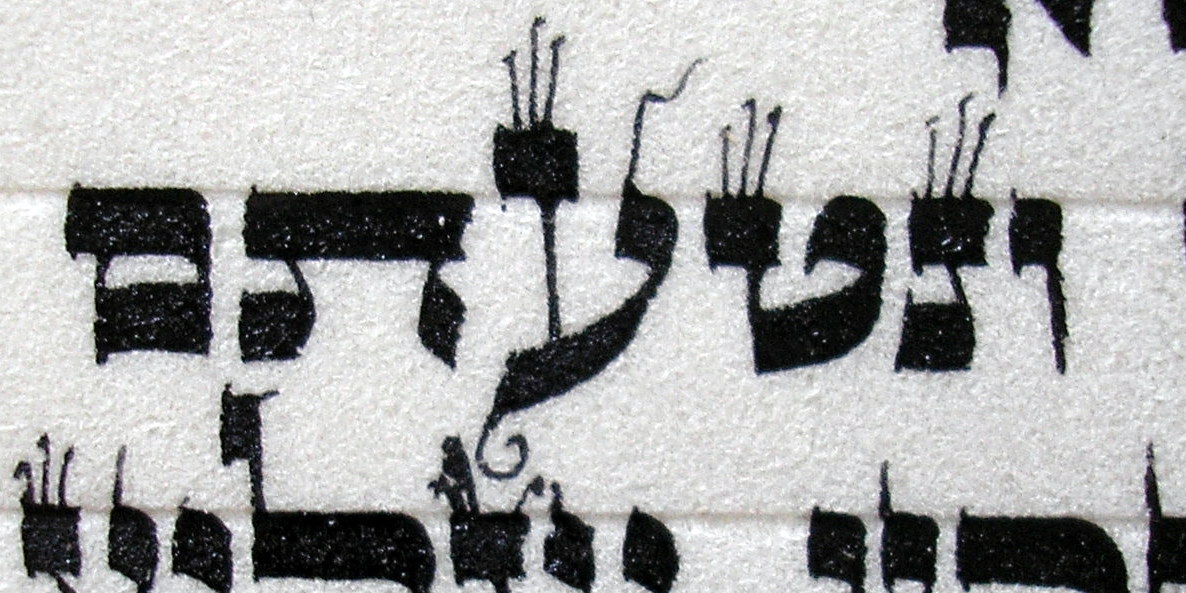
Kind of as if the text read …plAnted…, or:
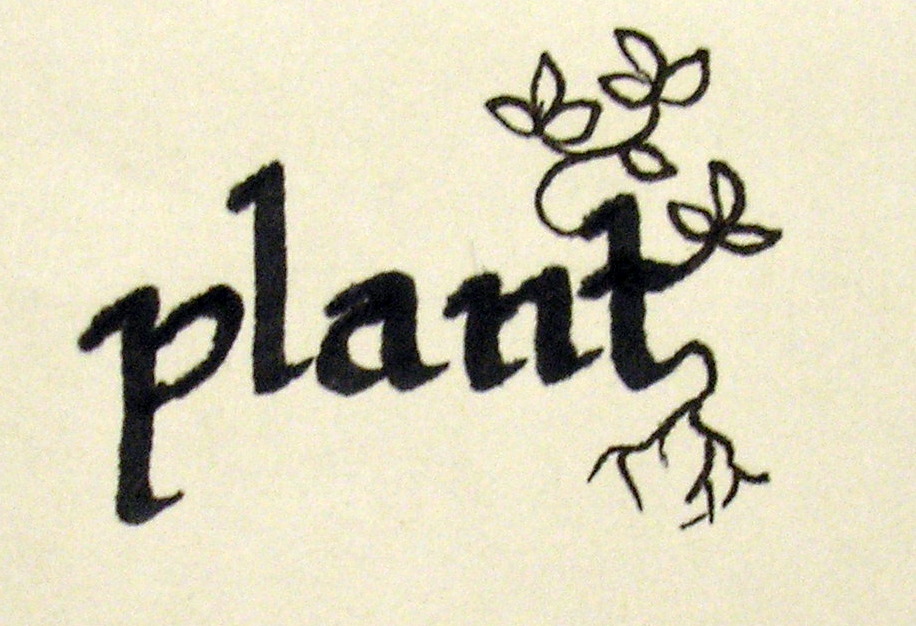
I just like that.
That kind of ayin doesn’t always indicate growing, I don’t think; later in the same paragraph (19.28) we have Do not put soul-cuts in your flesh, and do not make tattoo-writing in yourselves…:
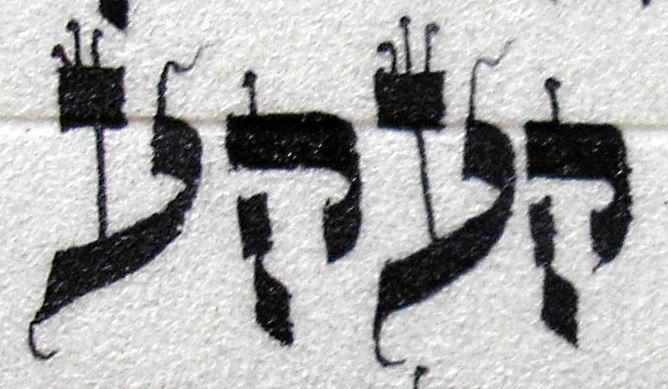
and I don’t think that’s talking about growing. Unless it’s hinting at a meaning which involves growing, i.e. scarification rather than tattooing, but that is most unscientific, so don’t quote that.
Darosh Darash–Shemini
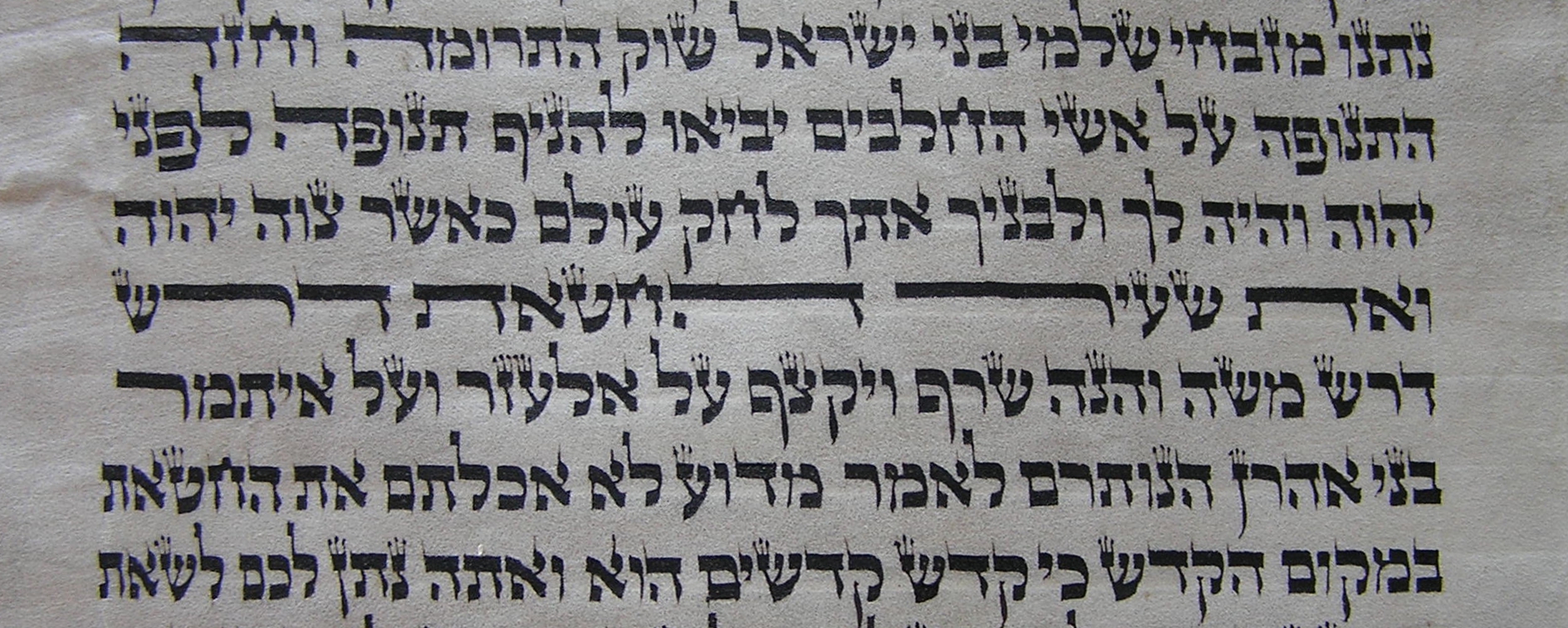
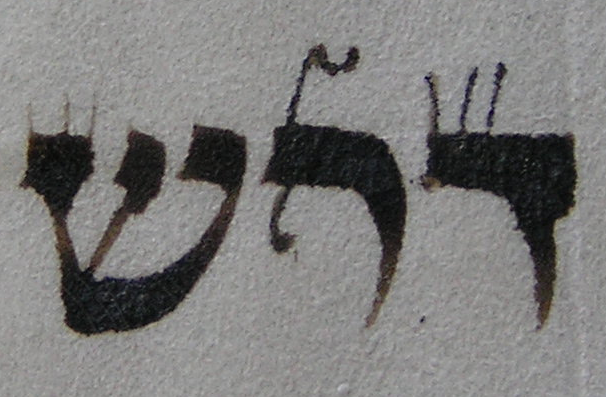
Here’s a section of parashat Shemini, from Leviticus 10:16: וְאֵת שְׂעִיר הַחַטָּאת דָּרֹשׁ דָּרַשׁ מֹשֶׁה וְהִנֵּה שֹׂרָף – And Moses he inquired diligently concerning the goat of the sin offering, and, behold, it was burnt. See how the scribe has stretched out the first words of the verse so dramatically? What’s going on there?
An early masoretic note, preserved in the Talmud (Kiddushin 30a) says that the words דרש דרש, he inquired diligently, are the middle words of the Torah.
By the time of the 1525 Mikraot Gedolot, we see the masoretic note in the form חצי התורה בתיבות דרש מכא ודרש מכא – Half of the Torah in words. Darosh from here, and Darash from here. You might well see this version in your printed chumash. The Masoretes are concerned with arithmetical questions: what’s the middle letter, the middle verse, the middle word? This note makes it plain that דרש finishes one half of the Torah, and דרש starts the second half.
In Masechet Sofrim, we see this note listed in chapter 9. Chapter 9 concerns itself with layout ideas—big and small letters, tagin, line breaks. It’s not a chapter about arithmetical concerns at all, so what is our arithmetical masoretic note doing here? It seems that the editor of Sofrim interpreted the masoretic note not arithmetically but spatially; Half of the Torah in words; Darosh from here [the end of the line], and Darash from here [the beginning of the new line].
Sofrim’s words are דרש דרש חצי תיבות של תורה, דרש בסוף שיטה דרש בראש שיטה– Darosh darash are the half[way point] of the words in the Torah; Darosh at the end of a line, and Darash at the beginning of a line. The verse must contain a line break! A layout rule has been created by interpretation.
This rule is not authoritative. Many Torah scrolls do not have a line break between דרש and דרש. But many do, and some scribes will stretch their letters, as above, to accomplish it.
But this is not the end of the story. After being interpreted arithmetically and spatially, our idea undergoes another transformation and is interpreted homiletically, by the 18th-century polymath R’ Hayyim Joseph David Azulai. He says:
Darosh at the end of a line, and Darash at the beginning of a line
This means – when you have expounded (darosh) the Torah to the point that you think you have exhausted all its meaning, and you think that you are at the very end of the “line” – not the line of layout, but the line of enquiry and scholarship – you should realize that you are really only “expounding the beginning of the line”.
Our sefer has something extra–both instances of דרש look like this:
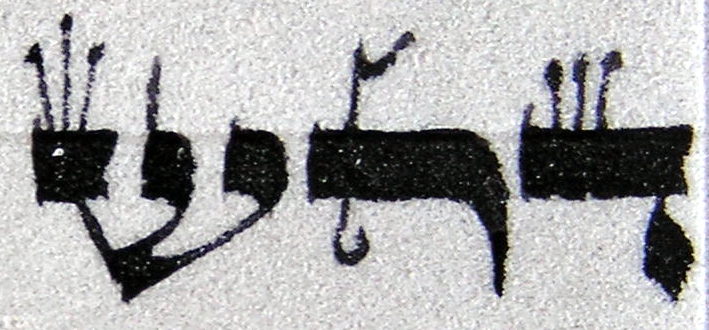
With profuse thanks to Gabriel Wasserman.
More letter adornments
Following on a bit from last week’s post, here are a few of the other things this sefer contains. Descriptions are mine, not hallowed by tradition.
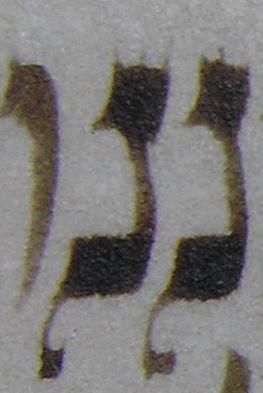
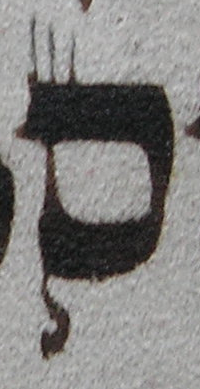
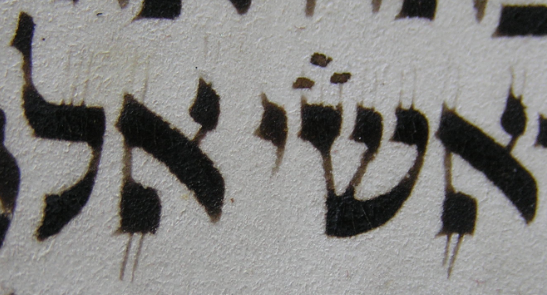
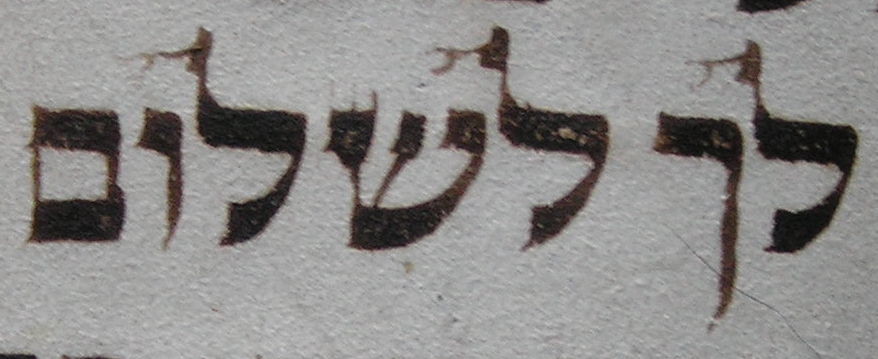
Tagin: the crowns on the letters of the Torah
When we look at words in the Torah scroll, we notice unusual decorations on the letters.

What are they? Why are they there? A very few seconds’ thought tells us that they are not vowels or cantillation, the more usual “decorations” of Hebrew letters.
The fourth-generation amora Rava states [Men 29b]: There are seven letters that each have three zayins: Shaatnez Gatz.
One of the places in Torah where the seven crowned letters cluster together:
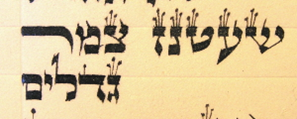
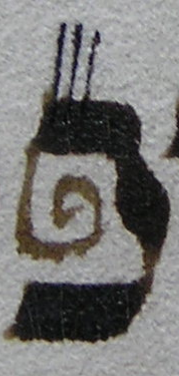
As interpreted today, the “zayins” come in all sorts of forms, sometimes several forms in the same sefer:
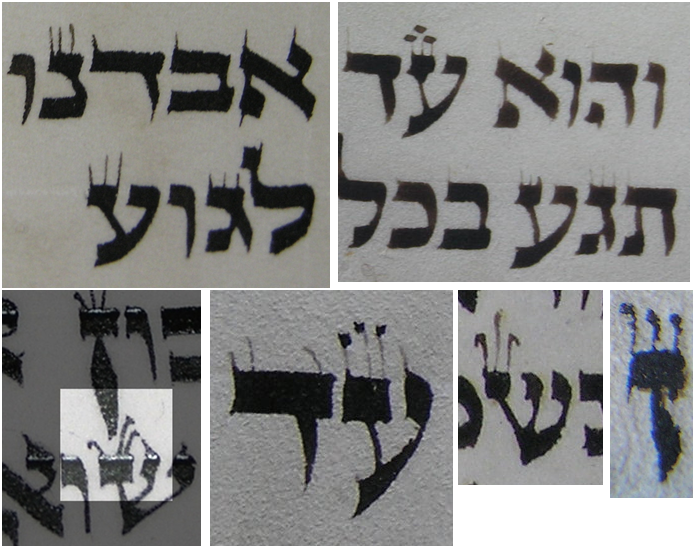
Some choose to connect these zayins to kabbalah. Part of the kabbalistic apparatus is the set of sefirot, sort-of divine levels of understanding. The ultimate one is Infinity, the utterly-unknowable-unless-you’re-God, then you get revelation and understanding (the intellectual realm, apparently), then a bunch of things like mercy and grace (the emotive realm), but this is a very bald rendering and properly it is terribly nuanced and subtle. And there are ten altogether.
Zayin is the seventh letter in the alef-bet, and it has three taggin. That makes ten sefirot! So one interpretation of a zayin is that the seven part, underneath, corresponds to the seven sefirot in the emotive realm, and the three part, the three higher.
In which case, the three taggin correspond to Keter (Infinity), Hokhmah (Wisdom), and Binah (Love). The middle one is the tallest, and represents Keter, which is the highest possible state of being; Hokhmah is the next tallest and the next most important so it sits on the right, and Binah is the shortest and sits on the left (Understanding the Alef-Beis, Dovid Leitner).
There is a famous story about tagin, told of the third-generation tanna Rabbi Akiva.
When Moses ascended Mount Sinai to receive the Torah, he found God tying crowns onto the letters.
“God,” said Moses, “surely you don’t need those?”*
God replied: “After many generations, there will be a sage named R’ Akiva, who will derive heaps and heaps of halakhot from them.”
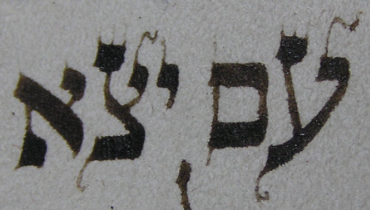
Because in some Torah-writing traditions, letters other than שעטנ”ז ג”ץ have adornments. For instance, Exodus 6:2-3 saysוַיְדַבֵּ֥ר אֱלֹהִ֖ים אֶל־מֹשֶׁ֑ה וַיֹּ֥אמֶר אֵלָ֖יו אֲנִ֥י יְהוָֽה׃ וָֽאֵרָ֗א אֶל־אַבְרָהָ֛ם אֶל־יִצְחָ֥ק וְאֶֽל־יַעֲקֹ֖ב בְּאֵ֣ל שַׁדָּ֑י וּשְׁמִ֣י יְהוָ֔ה לֹ֥א נוֹדַ֖עְתִּי לָהֶֽם — God spoke to Moses, and said to him, I am YHVH. I appeared to Abraham, Isaac, and Jacob as El-Shaddai, but by my name YHVH I was not known to them.
That second YHVH looks like this, in some traditions:
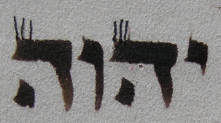
Three tagin per hey, see? This doesn’t happen on all heys, nor yet on all instances of YHVH–just on certain ones. Why?
One scholar explains: There are tagin on the Name to indicate that this is the crowned, distinguished Name, the superior, explicit Name. And why on the heys specifically? Twice hey is ten, and ten are the modes of existence: (1) Utter height, (2) utter lowness, (3) utter east, (4) utter west, (5) utter north, (6) utter south, (7) utter good, (8) utter bad, (9) utter firstness, (10) utter lastness.**
These tagin are altogether more obscure than the straightforward שעטנ”ז ג”ץ. It is probably these the midrash alludes to.
The sefer I am writing for CBH is following one of these traditions of special tagin. I am copying from a sefer owned by my synagogue in Washington Heights. I don’t know much about that sefer, except that it is old, beautiful, and part of my community, and I think the tradition of adorned letters it represents is probably worth preserving.
* Only You can understand them, God, so why give them to me? alternatively, isn’t the Torah already perfect with just its letters?
** G. Wasserman, trans.