I wanted to do you a post about why there aren’t any vowels or musical notation-marks in a sefer Torah, but when I came to study the subject, I realised it’s a good deal more complicated than can fit into one post. It seemed to require a brief history of vowel-marks, which in turn required a brief history of the alef-bet, which in turn required a brief history of writing in general.
So we’re going to start with a brief history of writing, and then we’ll do the alef-bet, and then we’ll do vowel-marks, and then we’ll be sorted.
Let’s get into it by way of Yosef. This week’s parsha and last week’s, Vayigash and Miketz, tell us about Yosef, employed in a high administrative position tracking and controlling food supplies for an enormous region through fourteen years of plenty and famine.
This kind of activity is how writing was invented, we think. People wanted to keep track of how many things they had (or were owed), so they used tallies, with one-to-one correspondence between the number of marks and the number of things; tally marks have been in use since the Stone Age, a matter of some forty thousand years.
Writing seems to have evolved independently in various areas. We’re ultimately interested in the alef-bet, so we’re going to take that route, but it’s worth remembering that this isn’t the only history of writing out there.
Between 8000 and 4000 BCE people used a token-based kind of abstraction for record-keeping: pebbles or clay tokens representing quantities. One pebble in a jar means one goat in the field; two pebbles in a different jar represents two baskets of grain, and you’d better remember which is which. During these four millennia, the level of abstraction expanded somewhat, such that instead of sixty-three pebbles in a jar meaning sixty-three I-think-it-was-goats-or-is-that-the-grain-jar-damn, you had one sixty-goat token and three one-goat tokens in your jar, and maybe some grain-tokens too, if you had any grain.
Keeping your goat record in a jar leaves you a bit open to your accountant hooking some of your goats, though, so people developed the habit of sealing their tokens in clay containers. Very nice and secure, right?
But a bit tiresome when you want to check up on how many goats you’ve got, that being the whole point of this record-keeping business anyway. Rather than keep on breaking open and resealing the clay containers, around 3500 BCE people started marking the containers while the clay was still wet, using a stylus to carve representations of the contents’ type and quantity.
The next step was to realise that once you have those marks in the clay, the tokens inside the jars are obsolete. The marks are now fully representing real-life objects, without the intermediary stage of tokens; they are no longer mnemonic but pictographic.
Once you’re writing things like “60 goats,” you might also want to convey “Belonging to me” or “When I counted them in the springtime”. Marks come to convey not just objects but ideas and situations.
The next step in the history of writing is using marks to represent sounds. You’ve read the Just So Stories, I take it? If not, go read the one under the link, and then come back.
Say a culture has a symbol 🙂 okay? It starts out representing someone with a smiley face, so when you see it, you think of someone smiling. How do you speak it? 🙂 also stands for the sound which comes out of your mouth when you say “smileyface.” Eventually, we might abbreviate 🙂 to be the sound “sm”.
This is how alphabetic writing systems are born. More about that next week.
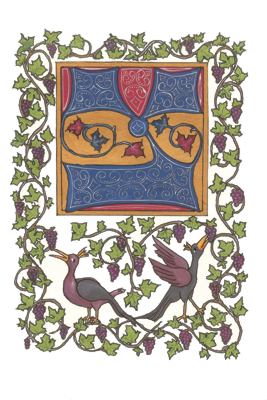 Postcards. Inspired by the illuminators of the Middle Ages, this series illustrates each letter of the Hebrew alphabet with awesome borders, yummy patterns, and the most darling little animals. Here’s the full set.
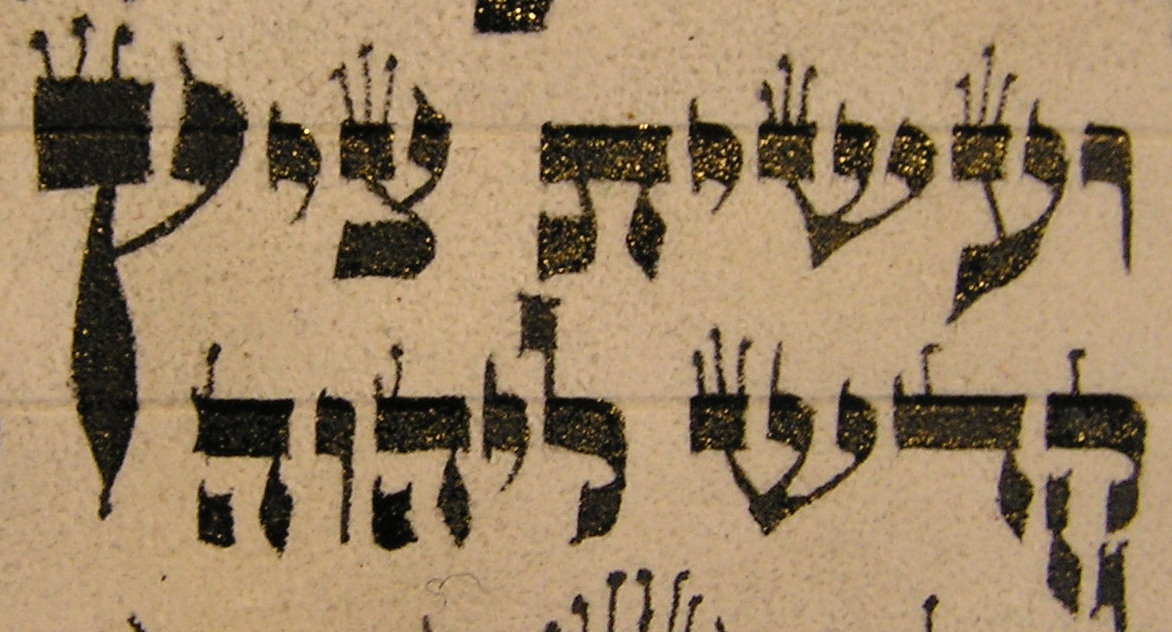
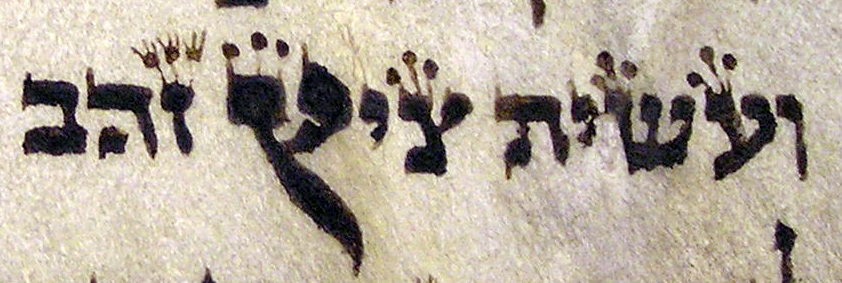
 I have a puppy.
 I think this is probably meant to be an aleph. Everyone’s first aleph is a bit dodgy.
 This is a much better aleph.
 Unless she meant it as a mem.
 It’s not a proper closed mem unless you actually bite your tail, but we’ll let it pass this time ex post facto.
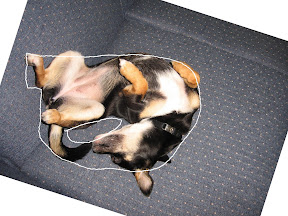 She might have meant it as a samekh, as well, and just forgot to tuck the ear in. These are the small details that make the difference, you see, but if she tucks the ear in next time and gets a good hold on that tail, it’ll be a very nice samekh.
 This is a pretty good yud. It even has the kotz of Rabeinu Tam. Well done, pup!
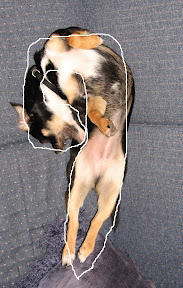 Straight peh – not easy if you’re a dog. A very nice try. The head shouldn’t touch the body, is the thing, so this one’s invalid, but on the plus side, the front paws are very nicely out of the way, and the back paws are beautifully pointed.
 I think this is probably intended as nun, although properly speaking nun has three tagin, not two,and it shouldn’t kick up on the end like that.
 Now, this is a surprisingly successful gimel. Three tagin, a head extending from each side, a good substantial foot well-joined to the body, and a body that extends a little down past the foot. Okay, it’s bent off to the side, but tails are like that, you can’t make them behave.
 This has right-angles on both top and bottom right-hand corners, which makes it technically a beit.
 I think she may have intended it as a khaf, though khaf can’t have sharp corners like that. Beginners often suffer with this kind of khaf/beit ambiguity; you need to learn both halakha and calligraphy skills before you’ll get it right reliably.
 Unless she meant it as a peh. The curly part should be bigger, though, and the Mishnah Berurah would say she should have a smoother curve on the back.
 This would be a pretty nice reish, if she’d tucked that front paw in.
 This has a distinct corner on the back, which means it’s dalet, not reish. That bent head on the left brings it perilously close to being a het – she could improve this just by bending her head up a little, nothing drastic.
 A brave try at lamed. Lamed’s neck ought to be longer really, but this is a dog, not a giraffe.
 I think this is intended as a final nun, but it’s one that’s gone rather wavy. It does have nice crisp edges, and a couple of very assertive tagin.
 A very nice Arizal het, only lacking the left-hand point. She seems to have gone for a whole word this time – חי – that yud is rather dicey, not as good as the yud we saw earlier, but it’s very nice spacing, and she can fix the yud by twitching her ear back.