This is based on a talk I gave a few weeks ago, on Shabbat Bereshit. It concerns the reading for the second year of the triennial cycle, which starts in chapter 4, in which God creates beings with plurality, male and female.
זה ספר תולדות אדם ביום ברוא אלקים את האדם בדמות אלקים עשה אותו, זכר ונקבה בראם, ויברך אותם ויקרא את שמם אדם ביום הבראם
This is the book of the generations of mankind. On the day that Elohim created mankind, in the image of elohim he made it; male and female he made them. And he blessed them, and he called their name mankind on the day of their creation.
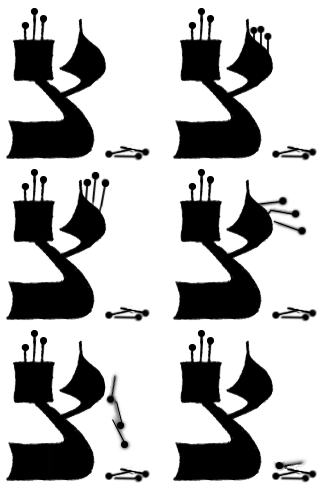
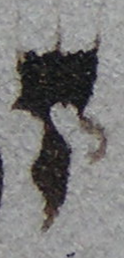
In their new sefer, the first letter looks like the image at right. The zayin has a little curl on its right-hand side.
This new sefer has a lot of little annotations like this. The annotations invite you to look deeper.
The phrase
These are the generations of… crops up a number of times in the Torah. What’s different about this one? Well, Nachmanides thinks that
Ze sefer means the entire Torah; this book which tells the history of mankind from its beginning. The Talmudic sage Ben Azzai thinks that this verse is the most important verse in the entire Torah, because it contains the foundations of all morality (against Hillel, who thinks
Love thy neighbour as thyself is the most important, but we digress).
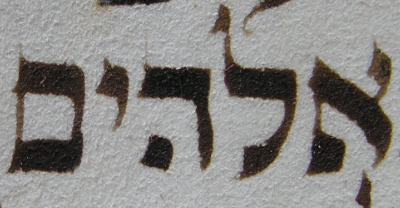
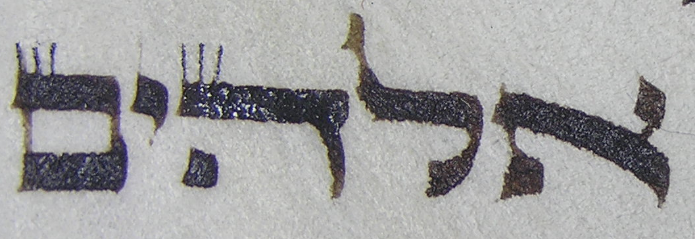
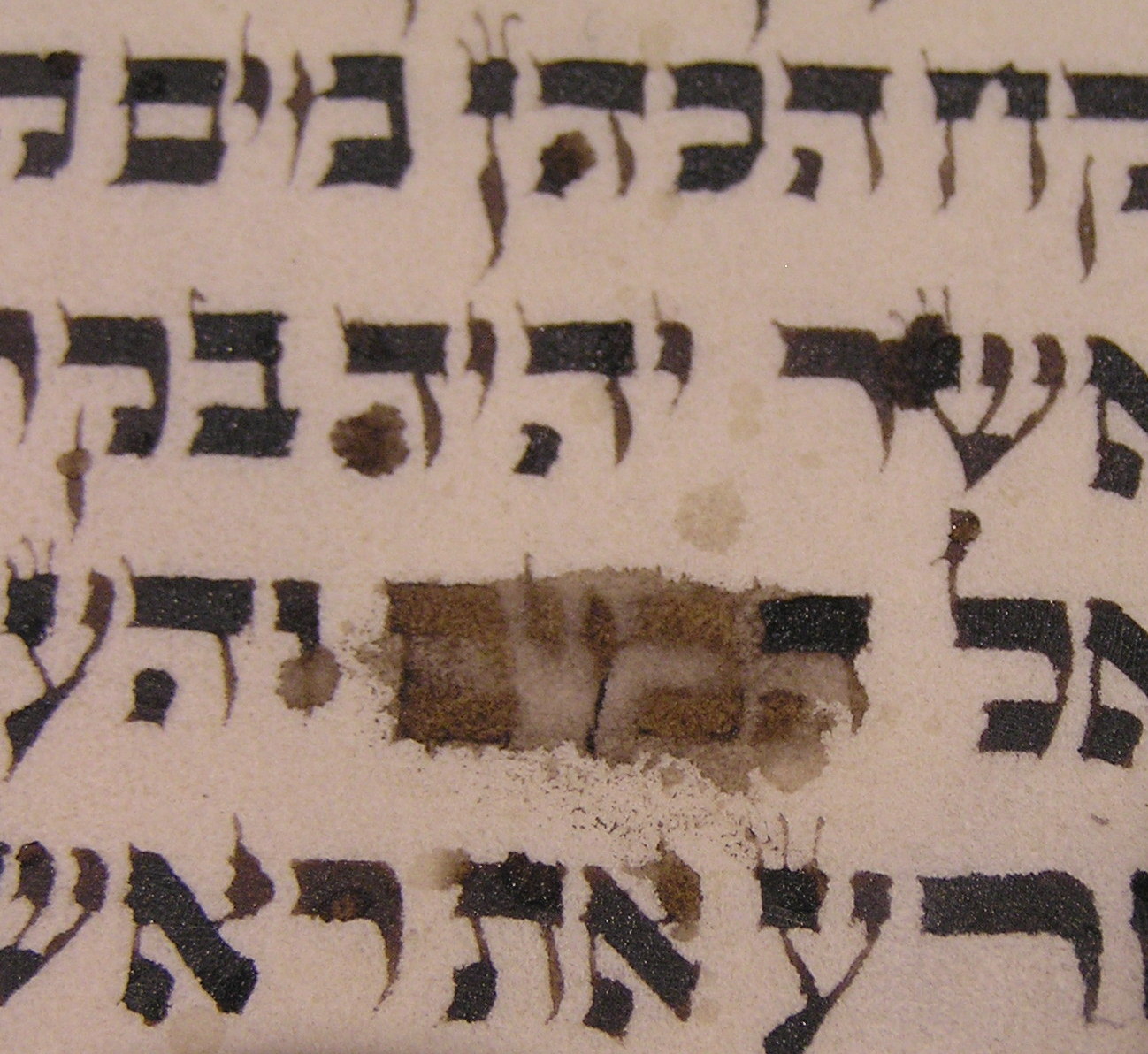
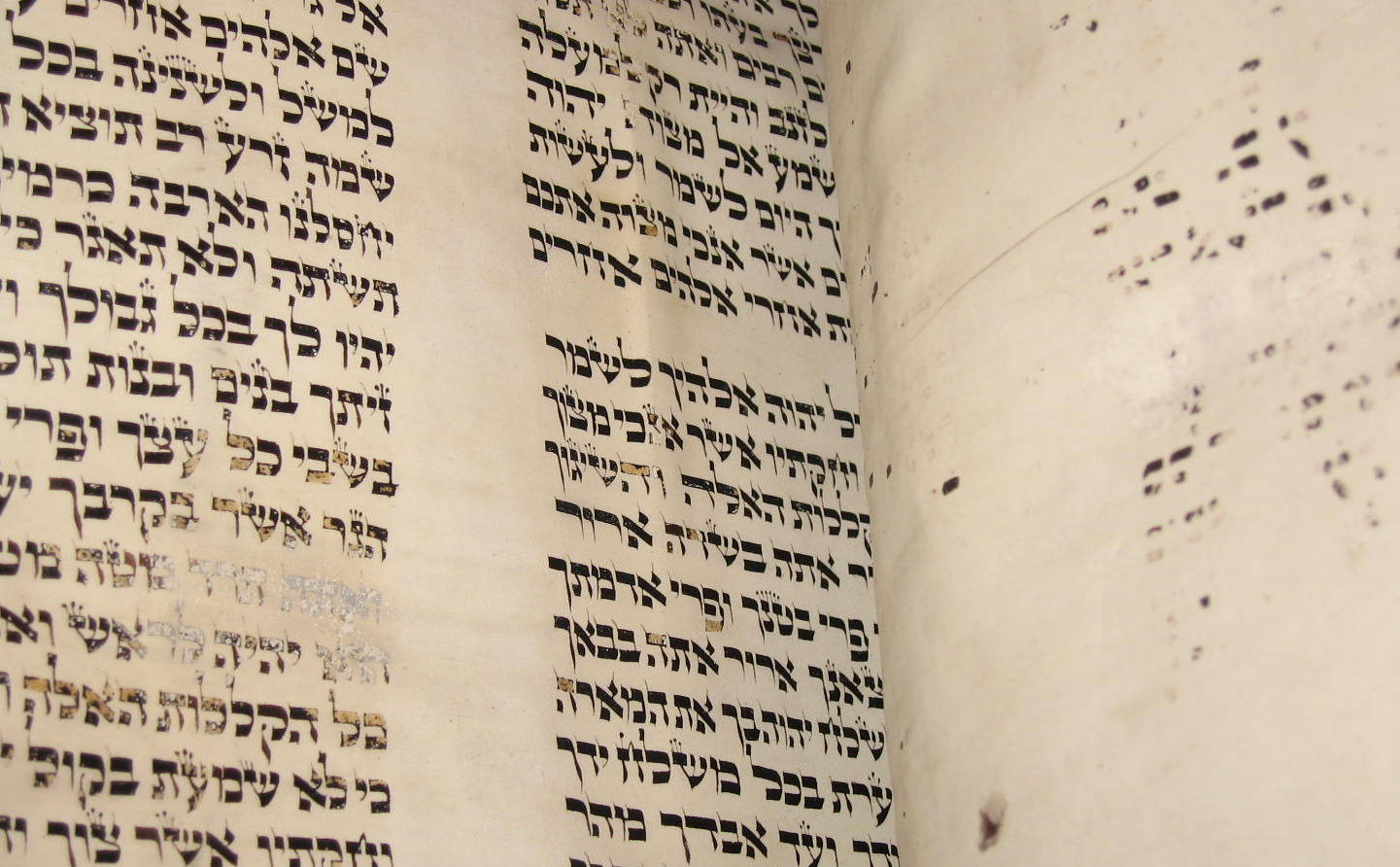
You see also that this verse has two instances of the word Elohim, which normally look like the image above, but in this new sefer looks like the image below: two letters in the word have multiple tagin on them.
One commentator says these may be functioning as delete marks; if you ignore the letters marked up by the tagin, you are left with the singular word El, making the point that although Elohim seems to be a plural word, you should be in no doubt that it is a singular quantity. In context, this could be a commentary on the nature of the beings created by God; although the language suggests that they are plural (compare the interpretation that says originally these beings were multi-gendered dual-body creatures which were separated only at a later date), you should make no mistake that they were actually singular.
Tagin also invite us to think about additions, rather than deletions. What does a set of three tagin bring to mind? Maybe it invites us to look for threes. For instance, look in the verse, at the letters following the three instances of the word adam. Alef-bet, alef-bet, alef-bet. Av, av, av. Three fathers. What other threes come to mind?
We’re asking what might be hinted at by three tagin on top of the regular letters. This might remind us of pardes–peshat, remez, drash, sod–and the three extra exegetical layers which ride above the plain text.
You might ask why all this exegesis is necessary. Why not just write it all out explicitly? Surely that would be easier. Well, one answer is that God was being merciful–has hakadosh barukh hu al mamonam shel yisrael–if it was all written out explicitly, it would be all but impossible to fulfil the mitzvah of ketivah sefer Torah.
Which sounds like a joke, until you consider the Talmud, which is the fifth-century attempt to do just that, write everything down explicitly, and how many complete copies of the Talmud–the central text of rabbinic Judaism–survived the Middle Ages? One. Just one. The bigger the book, the harder it is to ensure its survival.
So the traditions of extra tagin serve as easy-to-write reminders of extra content. Footnote markers, a hint that something extra is going on. The challenge is to remember the footnotes, a challenge which we have largely failed at this point.
So in our verse, what’s going on? To explain one idea, first we need to talk about the mechanics of writing God’s name.
Before writing the combination of letters representing God’s name, a scribe has to have the intention that God is the subject. Consider the letter string alef-lamed; sometimes it means God, sometimes it means a god in general, sometimes it means towards, sometimes it means don’t. Before you write it, you need to know which it is; we say it’s the thought that counts and the scribes’ code takes that literally.
Generally, the meaning is clear from context; it is holy, or it isn’t. But sometimes it isn’t clear. Sometimes it’s ambiguous, and will remain so till the coming of Elijah. In our verse, the first Elohim has the status of definitely-holy, and the second has the status of permanently-ambiguous. Was man really created in the literal image of God?
Consider those three fathers, above; one opinion thinks that the three fathers were created in the literal image of God, but subsequent generations were not. We also find these tagin in the first paragraphs of the first creation story, where three tagin emphasise hu v’lo malakh, hu v;lo saraf, hu v’lo shaliach–words we recognise from the Passover liturgy: He and not an angel; He and not a seraph; He and not a messenger. It’s possible that the tagin here, on the ambiguous Elohim, are a tradition expressing an opinion on the question.
There are a great many threes that three tagin could be hinting at. We’ll finish with another three, the three judges on a bet din. Elohim means judge, and the commentator Sforno says that our verse means mankind was created baal bechira, a master of choice, a possessor of free will. Three tiny lines serve as a powerful reminder of humanity’s capabilities and responsibilities.
We had Weather here this week. You might have heard something about it in the news. My bit of Manhattan is fine, so am I, and so is your Torah. Despite our apartment building swaying in the wind, which is unnerving because we aren’t Californians and therefore not used to buildings wobbling about.
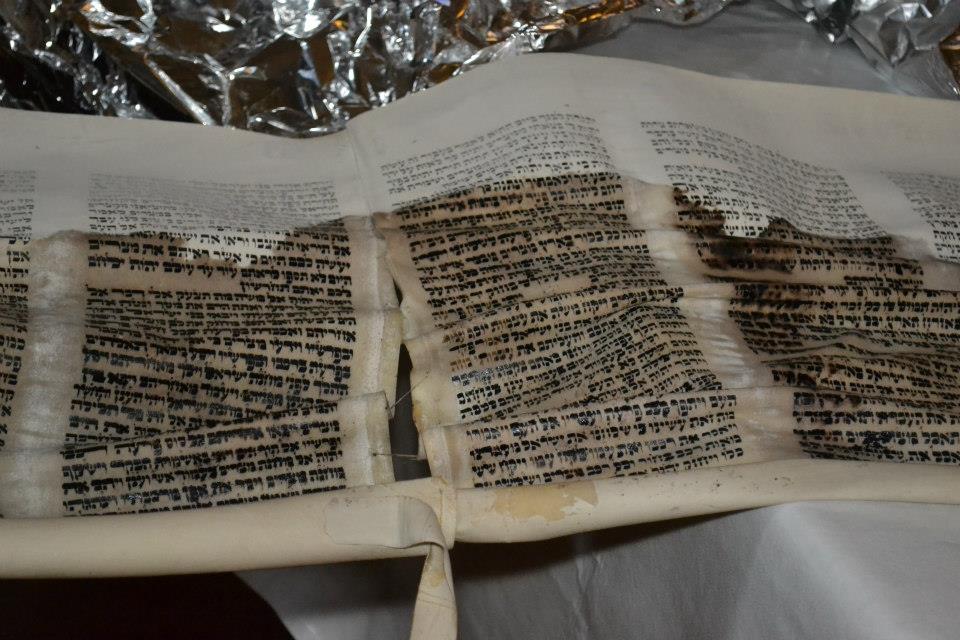
These scrolls were not so lucky.
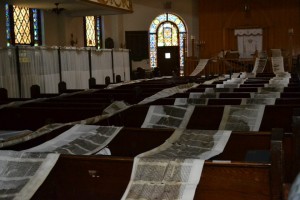
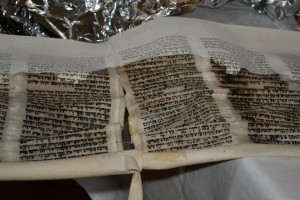
These scrolls were in a mandatory evacuation zone in a low-lying part of Brooklyn. The owners decided not to evacuate, or even to move their scrolls up to the second floor despite warnings of once-in-a-lifetime flooding, and this is what happened. The scrolls are ruined and probably cannot be repaired.
(If your scrolls get wet, do not lay them out like this. It will not help. Layer them flat back and forth in zigzags interleaved with kitchen paper and stack heavy weights on top to keep the sheets flat. Cut the seams if necessary.)
Star Apprentice puts it best: “We had a fire drill last week, and I noticed that it’s no-one’s job to evacuate the Torahs. It would be bad if we had a fire and the Torahs got burned or wet. The fire drill plan should include evacuating the Torahs. I’m going to do something about that.”
This is a post first for CBH, my current client, but I’m cross-posting because plenty of other Jews read this. If you find the above image upsetting, but your fire drill, hurricane plan, or other natural disaster preparation routine doesn’t feature your Torah scrolls, you should be asking yourselves why.
In this week’s parasha, water covers the face of the earth, so I’m going to share some pictures of various kinds of damage water can do to Torah scrolls.
Water damage happens from leaky roofs, but it also happens from sweat and spit, and from being stored in damp or humid locations. Wrapping a scroll tightly in plastic is a bad idea, because whatever moisture is trapped inside the plastic (and there will be some) will not be able to dry off.
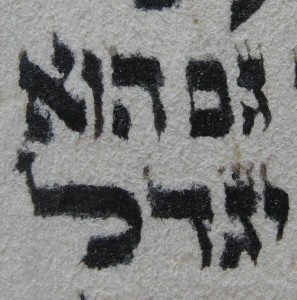
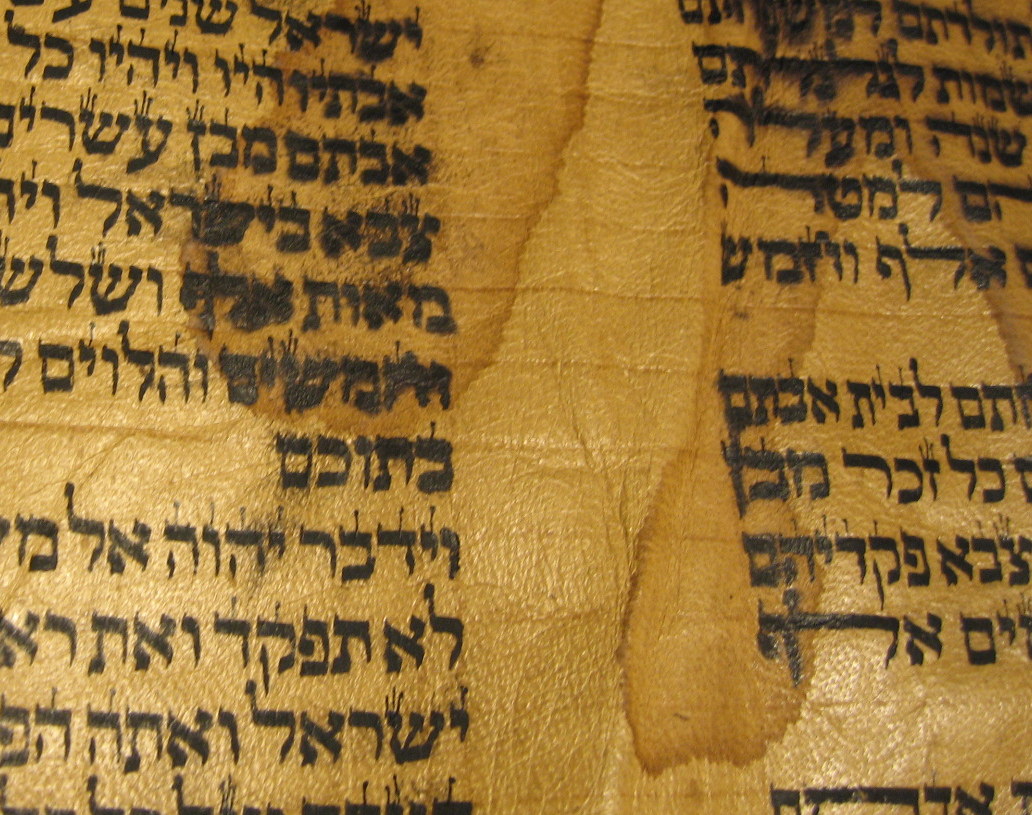
If you’re very lucky, your water damage will only make the letters a little bit fuzzy and hard to read.
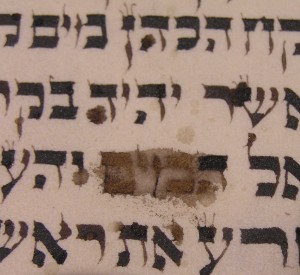
This is damage from sweat droplets. Fortunately, the rabbi had a tissue handy, and mopped up most of the sweat right away, before it had time to soak into the parchment. Multiple letters still needed repairing; when ink spreads such that letters touch each other, they’re not kosher any more and have to be repaired.
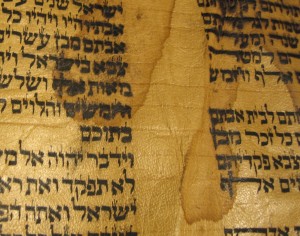
Water damage often causes ugly discolouration, and sometimes there is not much we can do about that. Also, sometimes the words are impossible to repair, because the water has made ink spread all through the parchment.
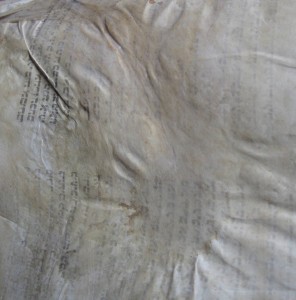
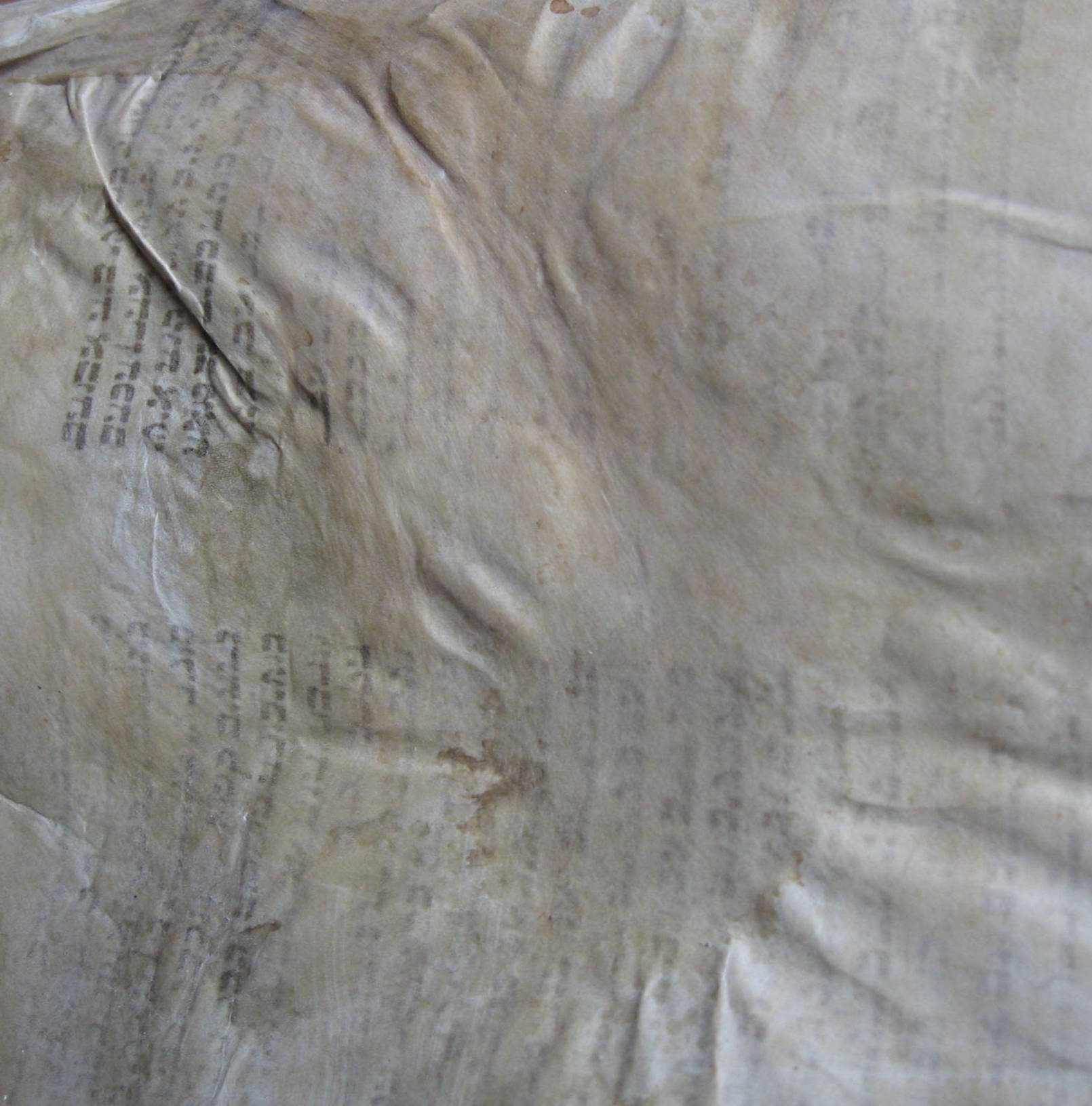
Here, water damage has caused the parchment to wrinkle. Removing wrinkles can sometimes be attempted, but it isn’t cheap. Wrinkles are bad for the parchment; they make it much more likely to tear. They also make life hard for the reader.
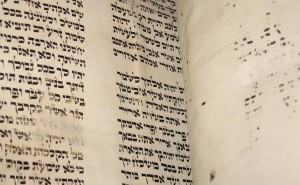
This sefer was stored for a long time in a damp location. The coating on the back of the scroll stuck to the letters, and when the scroll was opened, the letters peeled off. This scroll will have to be mostly rewritten.
To avoid water damage, consider keeping your sefarim in an environment with a dehumidifier. If your readers are prone to sweating, buy them headbands. Keep tissues on the bima in case of accidents. Don’t keep sefarim in closets built into external walls; such closets are generally damp. Generally remember that Torah scrolls are quite delicate when it comes to water, and act accordingly.
Bava Metzia 29b discusses what my responsibilities are if you leave your possessions with me while you’re away.
For instance (the Talmud would have said, if it could have) if I look after your car while you’re away on sabbatical, I ought to start it up every once in a while and drive it round the block, but it’s not cool for me to take it on vacation or use it to run errands. Unless you gave me permission in advance, obviously. When taking care of a valuable item, there are ways we expect people to behave.
Specifically, the Talmud discusses the most valuable item one might take care of; a sefer Torah.
1. If Reuven borrowed Shimon’s sefer Torah, he may not lend it to Levi. He may open it and read from it, but he may not read something for the first time, and another person may not read with him.
2. If Shimon left his sefer Torah with Reuven to look after, Reuven must roll it every 12 months, during which process he may open it and read from it. If he opened it for his own needs, he may not read from it.
3. Sumchus says a new sefer Torah is rolled every thirty days, and an old sefer Torah is rolled every twelve months; R’ Eliezer ben Yaakov says, new or old, it is rolled every twelve months.
From which we learn that there are minimum standards of care for a sefer Torah; if you are taking care of a sefer which does not belong to you, you must roll it at least every twelve months, possibly every month if it is new. You must also bear in mind that using the scroll causes wear and tear, just like using someone else’s car to run errands causes wear and tear.
I have mentioned the benefits of rolling before. Rolling keeps a sefer Torah flexible and prevents damage. I cannot emphasise enough the importance of regularly rolling your new sefer.
During Sukkot, one doesn’t write Torah. So instead, I’ve been making other fun things, and this week’s post is a shameless plug for said things.
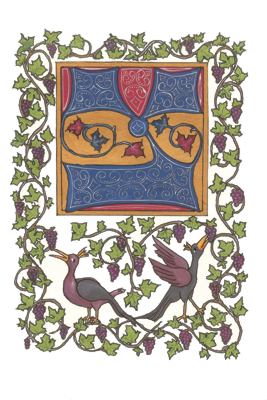
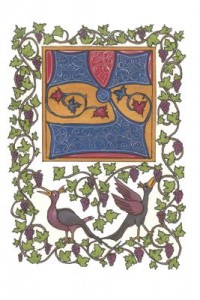 Postcards. Inspired by the illuminators of the Middle Ages, this series illustrates each letter of the Hebrew alphabet with awesome borders, yummy patterns, and the most darling little animals. Here’s the full set.
These postcards are 4×6 inches on heavy card stock – they look jolly nice framed, or they do actually work as real postcards, not that anyone really sends postcards these days, but in principle, you know.
I’m coming to CBH next week, so I decided to make a special offer for CBH people. Postcard set $15, which I’ll bring to the synagogue on my visit, provided you order before 11.59pm (Pacific time) on Thursday October 11th.
And here are some of the other things I’ve been up to:
Calligraphy is fun.
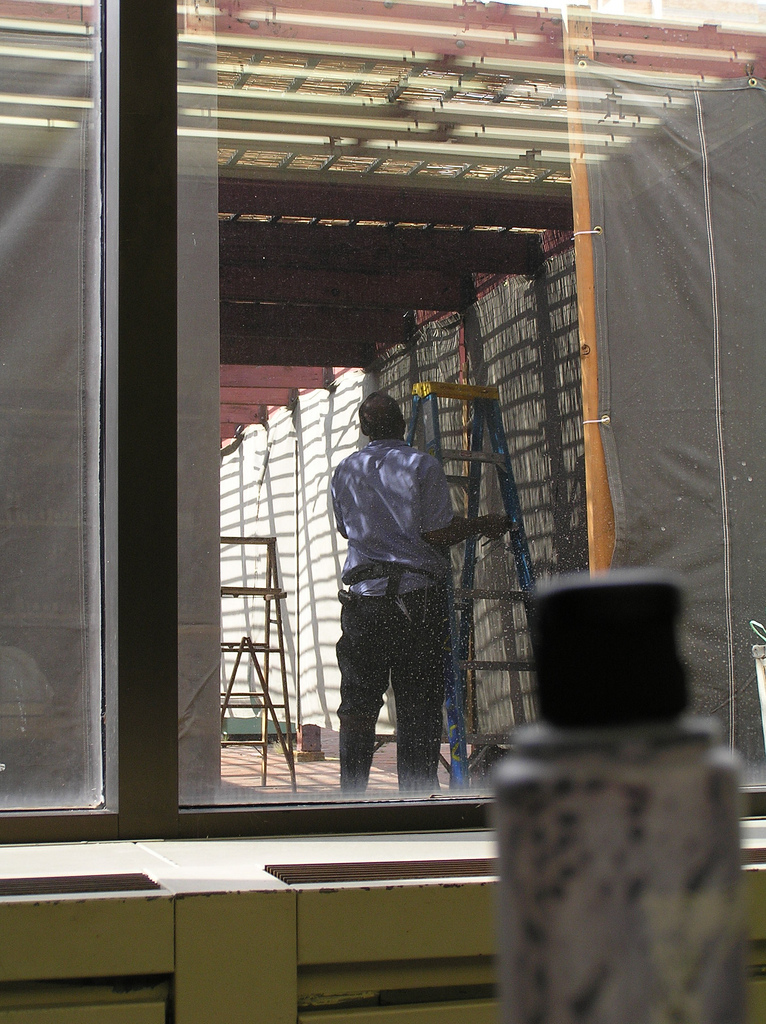
 View from the library of the Jewish Theological Seminary; ground-staff building a sukkah, ink-bottle in foreground.
We like working in the library, my apprentice and I. She has a big scroll of Torah that she’s repairing, and I have one sheet of Torah that I’m writing. There’s a part of the library which has great light and huge tables, so we meet there and work together.
Sometimes people come by and ask questions. Occasionally we inspire an undergraduate; last week one asked “Do you have to go to grad school to do this?” and could not quite believe that with hard work and diligence, you can sidestep the grad school part of having an interesting career entirely.
Generally the apprentice, with her huge scroll, attracts more attention than I do. So she gets to do all the impromptu teaching, and I just get on with writing.
In parashat Nitzavim we read:
הַנִּסְתָּרֹת לַיקֹוָק אֱלֹהֵינוּ וְהַנִּגְלֹת לָנוּ וּלְבָנֵינוּ עַד עוֹלָם לַעֲשׂוֹת אֶת כָּל דִּבְרֵי הַתּוֹרָה הַזֹּאת:
Concealed acts are the responsibility of the Lord our God [to judge]; but overt acts are the responsibility of us and our children unto eternity, to carry out all the words of this Torah.
In the Torah scroll, it appears thus:
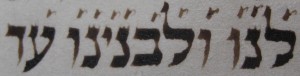
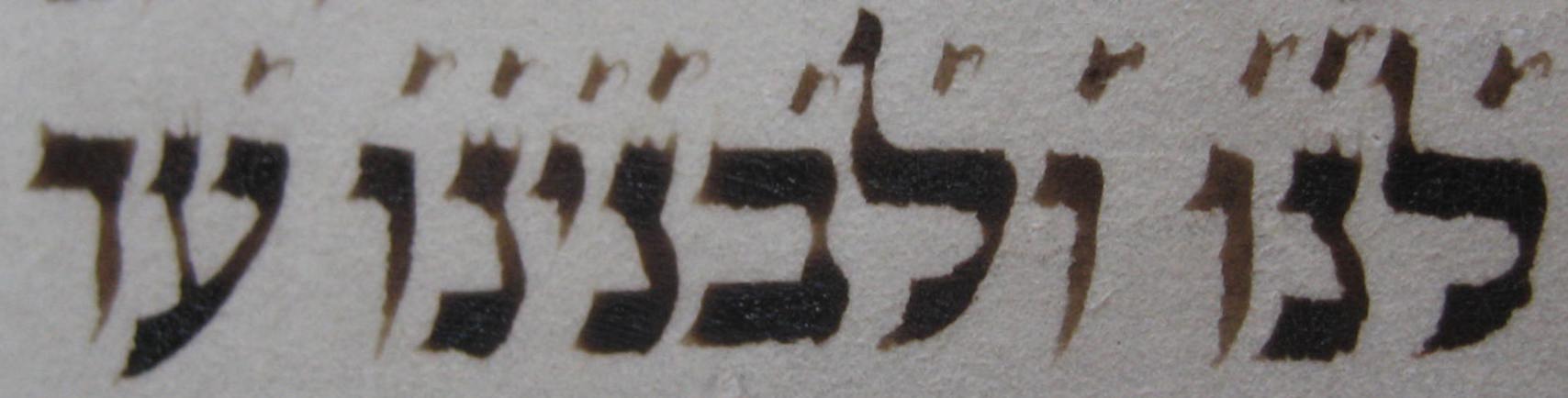
Let’s start with the dot over the ע of עד, unto. Why is only half the word dotted?
עד is a word suggesting continuity, time extending uninterrupted forever. A dot on one of the word’s only two letters breaks it up, brings the continuity to a stop. We are reminded of the distinction between this world and the world to come – the words לנו ולבנינו, us and our children, are obscured as if to say, we may not know the secret things now, but in the world to come they will be revealed. We simply have to do the best we can now with what we know.
If we don’t read the phrase לנו ולבנינו, us and our children, the verse starts “Concealed acts are the responsibility of the Lord our God, and overt acts also.” While the children of Israel are still in the wilderness, they are not wholly responsible beings; God is concerned with both their public and private acts and will dispense judgement, like a parent. Once they cross over the Jordan, though [Rashi], into their promised homeland, they have to take collective ownership of their actions. Now they are adults with autonomy. They have a responsibility to maintain law and order among themselves as best they can.
This is the longest run of dots in the Torah, eleven of them, and immediately before the dots is an eleven-letter phrase – ליהוה אלהינו. As we’ve seen, we don’t ever erase God’s name. We avoid even a suggestion of doing such a thing, so we wouldn’t put those eleven dots above ליהוה אלהינו. But the association is there; is it coincidence that there are exactly the right number of dots for ליהוה אלהינו, put in right next to the phrase, on the next available words? What if we read the verse without God? Then it reads “Concealed acts and overt acts are the responsibility of us and our children unto eternity…”
This means that we have responsibility for each other, helping each other obey the rules and do mitzvot – and we also have responsibility for ourselves. Each individual has to keep the laws, technical and ethical, as best they can, in public and in private. God is still there, to forgive us if we do something bad completely unknowingly, but we have to do the best we can by ourselves.
Shabbat 103b/Sifrei Vaethanan
וכתבתם – שתהא כתיבה תמה; שלא יכתוב אלפ”ין עיינ”ין, עיינ”ין אלפ”ין, בית”ין כפ”ין, כפ”ין בית”ין, גמ”ין צד”ין, צד”ין גמ”ין, דלת”ין ריש”ין, ריש”ין דלת”ין, היה”ין חית”ין, חית”ין היה”ין, וו”ין יוד”ין, יוד”ין וו”ין, זיינ”ין נונ”ין, נונ”ין זיינ”ין, טית”ין פיפ”ין, פיפ”ין טית”ין, כפופין פשוטין, פשוטים כפופין, מימ”ין סמכ”ין, סמכ”ין מימ”ין, סתומין פתוחין, פתוחין סתומין. פרשה פתוחה לא יעשנה סתומה, סתומה לא יעשנה פתוחה.
When the Torah says “ukhtavtam,” it means that it should be ketivah tamah – perfect/simple writing. So you shouldn’t make:
alephs into ayins or ayins into alephs.
Nor beits into khafs or khafs into beits.
Nor gimels into tzadis or tzadis into gimels.
Nor dalets into reishes or reishes into dalets.
Nor heys into hets or hets into heys.
Nor vavs into yuds or yuds into vavs.
Nor zayins into nuns or nuns into zayins.
Nor tets into pehs or pehs into tets.
You shouldn’t make bent ones straight or straight ones bent
Nor mems into samechs or samechs into mems.
You shouldn’t make opens closed or closeds open.
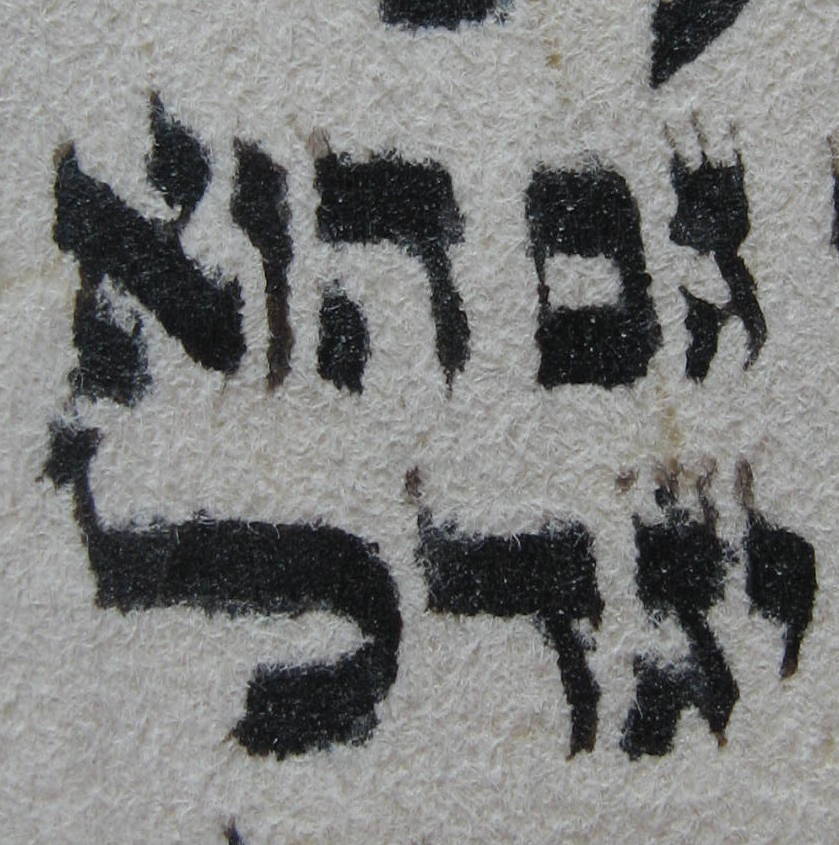
If you mix up alefs and ayins, this happens:
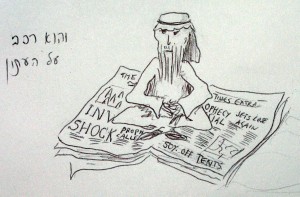
(אתון=donkey. עתון=newspaper.)
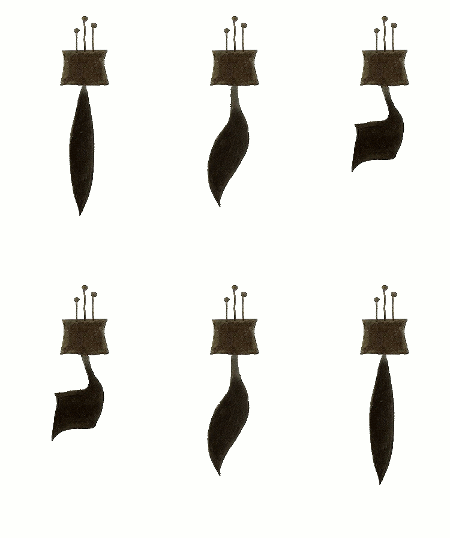
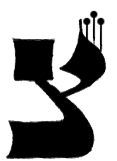
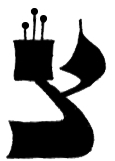 The very best sorts of people do mitzvot as soon as the opportunity presents itself, correct? And we read Hebrew from right to left, so surely we should put tagin on the right-hand head of letters such as tzaddi, which have more than one head? Like the image at left, in fact.